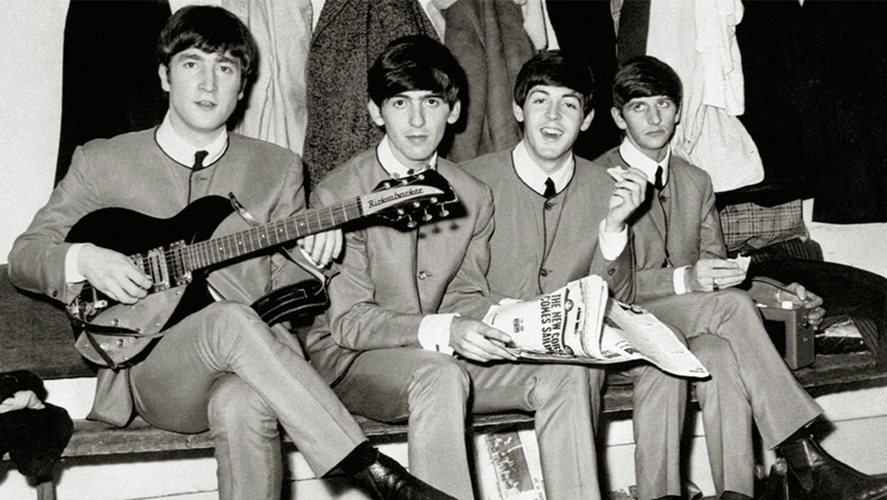
Sixty years after four young men from Liverpool stepped onto an American stage and changed popular culture forever, The Beatles’ conquest of the United States remains one of the most extraordinary success stories in music history. What began as a single television appearance in 1964 became a cultural earthquake that reshaped not only rock and roll, but fashion, youth identity, and the global music business itself.
When The Beatles appeared on The Ed Sullivan Show on February 9, 1964, an estimated 73 million Americans tuned in—nearly 40 percent of the U.S. population at the time. The country was still grieving the assassination of President John F. Kennedy, and the band’s buoyant energy, sharp humor, and irresistible melodies felt like a collective release. Overnight, Beatlemania swept across America.
Their impact was immediate and measurable. Within weeks, The Beatles held the top five positions on the Billboard Hot 100—an achievement that has never been repeated. Songs like “I Want to Hold Your Hand,” “She Loves You,” and “Can’t Buy Me Love” dominated radio airwaves, while albums flew off store shelves at unprecedented speed. Record companies scrambled to sign “the next Beatles,” launching what became known as the British Invasion.
But their success was not just about numbers. The Beatles arrived with a sound that felt fresh yet familiar, blending American rock and roll, rhythm and blues, and skiffle with their own melodic sensibility. Just as important was their image: the matching suits, the mop-top haircuts, and the playful defiance toward authority signaled a generational shift. Young Americans saw in John Lennon, Paul McCartney, George Harrison, and Ringo Starr a new kind of freedom.
As the years progressed, the band refused to stand still. Their American audiences grew with them as The Beatles evolved from pop hitmakers into studio innovators. Albums like Rubber Soul and Revolver pushed lyrical depth and sonic experimentation, while Sgt. Pepper’s Lonely Hearts Club Band redefined what an album could be—less a collection of songs, more a unified artistic statement. In doing so, The Beatles helped elevate rock music to a serious art form.
Touring America also revealed the pressures of their fame. Screaming crowds often drowned out the music, and controversies—most famously Lennon’s 1966 remark that The Beatles were “more popular than Jesus”—sparked backlash and record burnings in parts of the country. That same year, the band stopped touring altogether, choosing the studio over the stage. It was a risky move that ultimately cemented their legacy as innovators rather than mere entertainers.