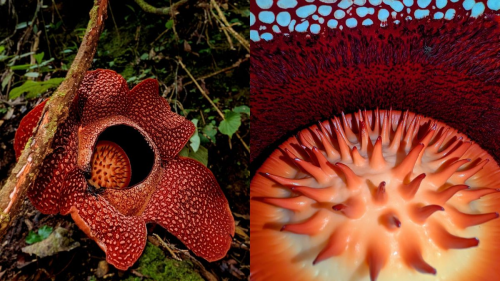
In a remarkable moment for science and conservation, Indonesia has witnessed the rare blooming of the Rafflesia — the world’s largest and one of its most elusive flowers — after an extraordinary wait of 13 years. Found deep within the forests of Sumatra, this giant parasitic bloom is known globally for its massive size, unique appearance, and short-lived flowering cycle that makes every sighting a significant biological event.
The Rafflesia, often called the “corpse flower” due to its strong odor resembling decaying flesh, can grow up to one meter in diameter. Its bloom lasts just a few days, making successful documentation crucial for ecological research. Scientists and forest rangers had been monitoring the plant for over a decade, awaiting the exact moment it would emerge from its vine host and unfold its striking reddish petals.
Environmental experts say this rare bloom offers valuable insights into the fragile ecosystems of Indonesia’s forests, where many species, including the Rafflesia, face threats from habitat loss and climate change. Researchers are now conducting detailed studies on the flower’s pollination, lifecycle, and survival patterns — information that could play a key role in protecting the species from further decline.
As news of the bloom spreads, it has captured global attention, highlighting Indonesia’s rich biodiversity and the importance of preserving natural habitats. For scientists, nature enthusiasts, and conservationists alike, this event is a powerful reminder of the hidden wonders still thriving in the wild — and the patience required to witness them.