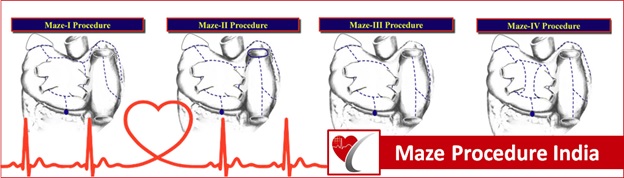
In a groundbreaking moment for Indian cardiac surgery, Govind Ballabh Pant Institute of Postgraduate Medical Education and Research (G.B. Pant Hospital) in New Delhi successfully performed the country’s first MAZE III procedure to treat atrial fibrillation (AF) — a complex and life-threatening heart rhythm disorder.
The pioneering surgery was conducted in the early 2000s by a team of expert cardiothoracic surgeons, marking a significant advancement in the surgical management of chronic atrial fibrillation in India’s public healthcare system.
The MAZE III surgery, developed at Washington University in the U.S., is considered the gold standard for surgical treatment of AF. It involves creating a series of precise incisions (or ablations) in the atria of the heart, forming a “maze” of scar tissue that disrupts the abnormal electrical signals causing the arrhythmia and restores normal sinus rhythm.
At G.B. Pant Hospital, the surgery was performed using the cut-and-sew method, making it the first such operation in India’s government healthcare sector. It was especially significant as it was:
- Conducted on a patient with drug-resistant persistent AF.
- Performed in conjunction with another open-heart procedure (e.g., mitral valve repair/replacement).
- Successfully restored normal heart rhythm post-operation.
Senior cardiothoracic surgeon at G.B. Pant Hospital said:
“The MAZE III procedure is a highly intricate operation that demands surgical precision and teamwork. Performing it for the first time in a government setup was a major step in making advanced arrhythmia treatment accessible to the general population.”
- First-of-its-kind in a public hospital in India.
- Opened the door for advanced arrhythmia surgeries in state-run institutions.
- Elevated India’s capabilities in treating complex electrophysiological cardiac disorders surgically.
Since then, several centers across India have adopted the MAZE procedure and its modern variants (like CryoMAZE or Radiofrequency MAZE), with G.B. Pant Hospital remaining a respected hub for academic training and cardiovascular innovation.