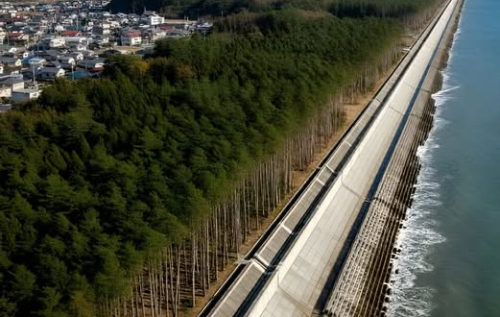
Japan is redefining disaster preparedness by combining advanced engineering with the protective power of nature. Along its northeastern coastline, the country has completed a massive 395-kilometer tsunami wall while simultaneously planting over 9 million coastal trees, creating one of the world’s most comprehensive natural-tech defense systems.
This dual approach emerged from lessons learned after the devastating 2011 Tōhoku earthquake and tsunami. While the concrete wall acts as a first line of defense to break the force of incoming waves, the vast belts of newly planted pine and tamarisk trees serve as a natural buffer—slowing water, reducing debris impact, and protecting communities from long-term erosion.
Engineers and environmental planners say the project marks a historic shift in disaster management thinking. Instead of choosing between technology or nature, Japan has shown that true resilience comes from using both together.
The green belt also brings ecological benefits: restoring coastal habitats, improving soil stability, encouraging biodiversity, and providing recreational green spaces for local residents.
Communities along the Sanriku coast now stand protected by an unprecedented hybrid system—one that symbolizes Japan’s commitment to safety, sustainability, and harmony with the environment.