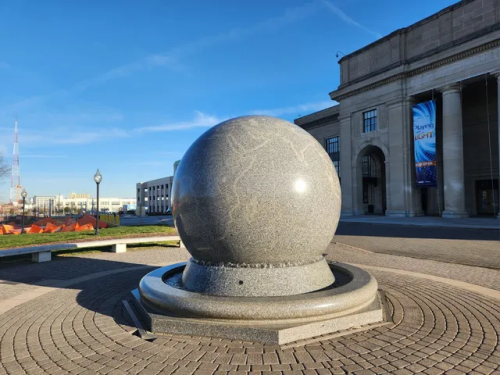
The Mary Morton Parsons Earth-Moon Sculpture, better known as the Grand Kugel, holds the title of the world’s largest floating-ball sculpture — a remarkable blend of art and scientific engineering that continues to fascinate visitors at the Science Museum of Virginia.
This massive installation features a 29-ton granite sphere nearly 9 feet (2.65 m) in diameter that appears to float effortlessly on a thin film of water, creating a captivating public sculpture and interactive exhibit space.
Carved from polished South African black granite and meticulously balanced within its basin, the Grand Kugel demonstrates the kugel fountain phenomenon — where pressurized water lifts and supports the heavy stone, allowing visitors of all ages to spin the enormous globe with a fingertip despite its immense weight.
Named in honour of benefactor Mary Morton Parsons, the sculpture also includes a proportionally smaller moon sphere, creating a symbolic representation of the Earth-Moon system.
Since its installation in the early 2000s, the Grand Kugel has become a beloved attraction, drawing crowds to marvel at its size, engineering, and interactive charm, and solidifying its place in record books as the world’s largest floating-ball sculpture.