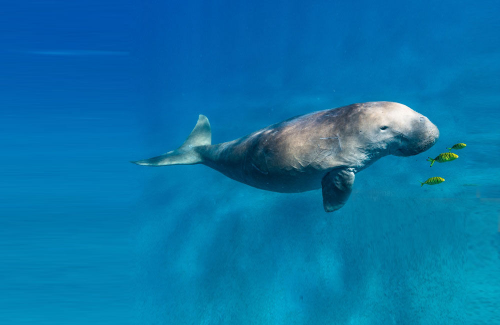
Beneath the sands of modern-day Qatar lies a window into a forgotten marine world. Around 21 million years ago, the region was home to a diverse ecosystem of sea cows, including the recently discovered Salwasiren qatarensis, the smallest sea cow ever identified.
Unlike today’s manatees and dugongs, Salwasiren qatarensis retained visible hind legs, offering scientists a rare glimpse of the transitional phase from land to fully aquatic life. Fossil evidence suggests these tiny sea cows were already playing a key role in shaping seagrass ecosystems, long before human civilization emerged.
The discovery sheds light not only on the evolution of sirenians but also on how ancient marine ecosystems functioned in a region now dominated by desert. Salwasiren qatarensis highlights the diversity and adaptability of life in prehistoric seas, showing that even small species could leave a lasting ecological impact.
This remarkable find underscores the power of paleontology to uncover hidden chapters of Earth’s history, revealing ecosystems and species that have long been buried beneath shifting sands. Platforms like the Paleon app allow enthusiasts to explore these stories in detail, offering a deeper appreciation for the ancient worlds that once flourished where deserts now lie.