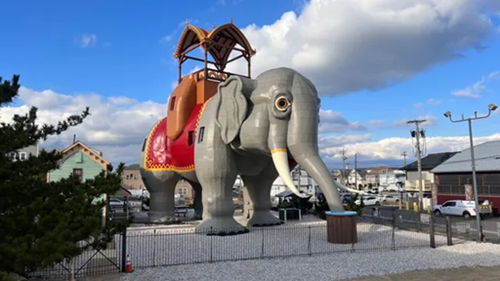
One of the most beloved and unusual roadside attractions in the world Lucy the Elephant holds the distinction of being the world’s largest elephant statue, an enduring piece of novelty architecture and historic landmark that continues drawing visitors from around the globe.
Lucy the Elephant was constructed in 1881–1882 by real‑estate developer James V. Lafferty as a promotional tool and curiosity landmark. The massive structure stands a towering 65 feet (about 19.7 metres) tall, measures 60 feet (≈ 18.3 m) from trunk to tail, and spans 18 feet (≈ 5.5 m) in width and all of it was built from approximately one million pieces of wood, nails and tin sheeting.
More than just a giant sculpture, Lucy is a six‑story building that has served many purposes over its lifetime including as a real‑estate office, restaurant and tavern and today functions as a museum and historic attraction near the beach in Margate City, close to Atlantic City.
Recognised by record‑tracking organisations as the world’s largest elephant statue, Lucy has become a cultural icon frequently featured in travel guides and celebrated for both its size and quirky architectural charm. Visitors can even climb inside via a spiral staircase and explore the interior, culminating in a view from the “howdah” (seat) at the top.
From its origins as a 19th‑century marketing stunt to its modern role as a beloved monument, Lucy the Elephant remains an unforgettable testament to creativity, engineering and roadside Americana.