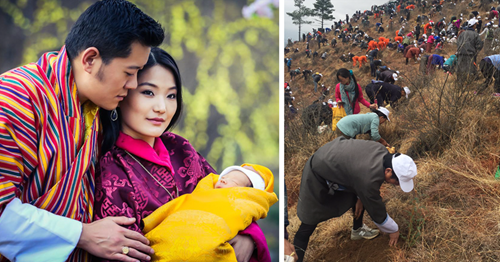
Bhutan, renowned globally for its deep commitment to environmental protection and sustainable living, marked the birth of its new prince with a remarkable ecological tribute — the planting of 108,000 trees across the Himalayan kingdom. The nationwide effort reflects the country’s tradition of honoring significant milestones with actions that benefit both people and the planet.
The planting occurred in early March 2016, about a month after King Jigme Khesar Namgyel Wangchuck and Queen Jetsun Pema announced the birth of their heir, Crown Prince Jigme Namgyel Wangchuck on 5 February 2016. Tens of thousands of volunteers including government officials, community leaders and ordinary citizens participated in the initiative, covering the country’s varied terrain from capital Thimphu to its remote districts.
In Buddhist tradition, trees symbolize longevity, health, beauty and compassion, and the number 108 is considered sacred representing the cleansing of 108 defilements on the path to spiritual enlightenment. Each sapling was planted with well wishes for the prince’s future, reinforcing both spiritual and ecological significance.
The species chosen ranged from pine and oak to dogwood, tailored to thrive in Bhutan’s diverse altitudes and climates. Bhutan’s constitution mandates that a minimum of 60 % of the nation’s land remain under forest cover, and initiatives like this support the country’s reputation as one of the world’s most eco-friendly and carbon-negative nations. The tree-planting celebration not only honored the new royal birth but also reinforced Bhutan’s long-standing conservation ethos a model of environmental stewardship that blends cultural reverence, community engagement and sustainable action.