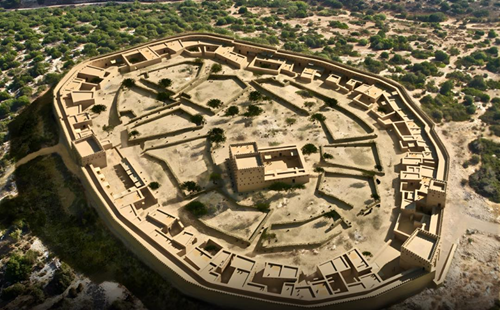
In a stunning archaeological breakthrough overlooking the Valley of Elah, the site where the biblical David and Goliath story is set, researchers have excavated an ancient fortified city Khirbet Qeiyafa that may correspond to the biblical city of Shaarayim, a name meaning “two gates.”
Carbon-14 dating of olive pits unearthed at the site places the city between 1050 and 930 BCE, aligning closely with the reign of King David according to biblical chronology.
What has captivated archaeologists and historians alike is the city’s unique dual-gate layout a feature previously undocumented in Israel for this period. One gate faces toward Azekah, while the other opens toward the Valley of Elah, perfectly matching the ancient Hebrew name Shaarayim, which literally translates as “two gates.” This architectural design is exceptionally rare in early Iron Age cities, which typically had a single entrance.
The fortified city spanned roughly 2.3 hectares and was encircled by imposing megalithic walls, underscoring its strategic importance in an era marked by regional power struggles.
In addition to its distinctive gates, the excavation has revealed further evidence of organized urban planning and central authority rather than fragmented tribal settlements. Archaeologists uncovered an ancient inscription in early Hebrew script, among the earliest examples of written language from this period, further supporting the city’s advanced social structure.
Taken together, these discoveries at Khirbet Qeiyafa not only illuminate the physical layout of a once-lost city but also offer tangible clues about the emergence of centralized power and literacy in Judah during the time traditionally associated with King David.
Scholars believe that this fortified site with its twin gates and distinctive artifacts may finally explain why the biblical Shaarayim earned its name, providing a rare archaeological bridge between ancient text and material history.