Tags :Limca Book of Records
The oldest recorded magic square in India appears in Varāhamihira’s encyclopedic work, the Bṛhat-Saṃhitā (c. 550 CE). This early 4×4 Read More
Indian mathematicians made profound contributions to trigonometry, shifting from the ancient Greek system of chords (used by Ptolemy and others) to Read More
The equation ax + by = c, where a,b,ca, b, c are integers and x,yx, y are unknown integers, is an Read More
Medhatithi, a scholar from the 9th or 10th century CE, was among the first to systematically propound the concept of counting numbers Read More
The Gupta inscription from 448 CE found in Allahabad (now Prayagraj), Uttar Pradesh, provides early evidence of the decimal place-value system in India. Read More
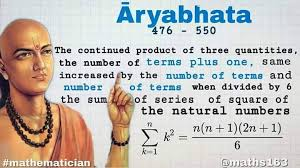
Aryabhata was an Indian mathematician and astronomer from Kusumapura (modern-day Patna, Bihar), known for his groundbreaking contributions to algebra, trigonometry, and astronomy. Read More
Brahmagupta, an Indian mathematician and astronomer, made revolutionary contributions to mathematics, particularly in defining and operating with zero. His most influential work, Read More
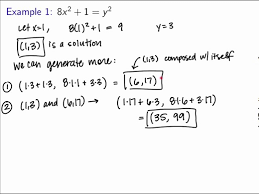
Brahmagupta (598–668 CE) made significant progress in solving what is now called the Pell equation, and Bhaskara II (1114–1185 CE) later improved upon it. Read More
Bhaskara II (c. 1114–1185), also known as Bhaskaracharya, was one of the greatest mathematicians and astronomers of medieval India. Born in Bijapur (Read More
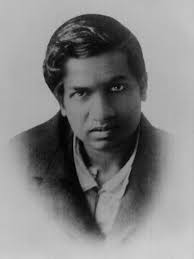
Srinivasa Ramanujan (1887–1920) was a self-taught Indian mathematician whose groundbreaking contributions to mathematical analysis, number theory, infinite series, and continued fractions have Read More