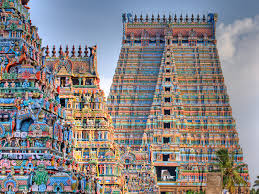
The Sri Ranganathaswamy Temple at Srirangam, located in Tiruchirappalli District, Tamil Nadu, is one of the most important and grandiose temples dedicated to Lord Ranganatha, a form of the Hindu deity Vishnu. The temple is renowned for its architectural splendor and its significance in the Vaishnavism tradition. The complex is spread over an expansive area and is known for its monumental gopurams (gateway towers), intricate carvings, and religious significance.
- The Sri Ranganathaswamy Temple is famous for its 72-meter (236 feet) high rajagopuram, the main entrance tower of the temple. The rajagopuram is one of the tallest in India and is an iconic feature of the temple complex.
- The rajagopuram is adorned with intricate carvings and sculptures depicting scenes from Hindu mythology, mainly focusing on Lord Ranganatha (a reclining form of Lord Vishnu) and his various avatars and incarnations.
- It was constructed between 1982 and 1987 and stands as a remarkable example of Dravidian architecture, characterized by its towering height, intricately detailed sculptures, and colorful decoration.
- Sri Ranganathaswamy Temple is considered one of the most revered temples in Tamil Nadu and is a central pilgrimage site for Vaishnavites. It is the first of the 108 Divya Desams, which are sacred temples dedicated to Lord Vishnu, as mentioned in the works of the Tamil Alvars (saints).
- The temple is believed to have been originally built by the Chola dynasty in the 10th century CE and later expanded by various rulers, including the Vijayanagar Empire. The temple’s structure has been added to and modified over the centuries.
- The temple is built in the traditional Dravidian style of architecture, characterized by large, intricately carved stone structures, expansive courtyards, and monumental gopurams.
- The temple complex consists of seven concentric enclosures (prakharas), each surrounding the sanctum sanctorum (the garbhagriha) where the idol of Lord Ranganatha is enshrined.
- The sanctum houses a reclining statue of Lord Ranganatha, which is the main deity of worship in the temple. The statue is depicted reclining on the Adisesha (the serpent king), with his head resting on a pillow. The statue is made of stone and is around 9 feet long.
- The temple features numerous mandapams (halls), each serving different purposes for rituals, including the Thousand Pillar Hall and the Kalyana Mandapam (marriage hall).
- The walls, ceilings, and pillars of the temple are elaborately decorated with sculptures and frescoes depicting episodes from Hindu mythology, including stories from the Ramayana, Mahabharata, and various legends of Lord Vishnu and his avatars.
- The temple has a unique design with seven prakaras (concentric enclosures) that provide a sense of spiritual progression for the devotees as they move closer to the sanctum.
- Each prakara is surrounded by a series of gopurams and walls, and each level has its own set of deities and sacred shrines dedicated to different forms of Lord Vishnu, his consort Lakshmi, and other gods and goddesses in Hinduism.
- Pilgrims move through these prakaras to experience the different aspects of the temple, beginning from the outermost prakara and making their way inward.
- The Sri Ranganathaswamy Temple is a key religious and cultural center in the Vaishnavite tradition. It hosts several festivals throughout the year, including the Rathotsavam (Chariot Festival), Vaikunta Ekadasi, and Panguni Uthiram.
- The temple is also associated with several Tamil devotional hymns composed by the Alvars, the Tamil Vaishnavite saints, and the Acharyas of the Srivaishnava tradition.
- Pilgrims come from across India and abroad to offer prayers and participate in the temple’s vibrant festivals, rituals, and cultural events.
- Lord Ranganatha is worshipped in the form of a reclining deity, symbolizing the eternal cosmic rest and the preservation of the universe. The reclining form of Vishnu represents the concept of eternal peace and the preservation of the world, as the deity is believed to rest on the serpent Adisesha.
- The temple has been an important center for the Vaishnavite tradition, and the presence of Lord Ranganatha is believed to have a spiritual significance for devotees seeking peace, protection, and divine grace.
- The Rajagopuram, built in the late 20th century, is part of the modern developments in the temple. The original temple had its smaller gateway towers, but the 72-meter tall gopuram was designed to reflect the grandeur and religious significance of the temple.
- The temple has undergone several renovations and restorations over the years, both to preserve its ancient architectural glory and to maintain its religious significance. The construction of the rajagopuram was one of the significant modern interventions that further enhanced the temple’s status as an architectural and religious landmark.
The Sri Ranganathaswamy Temple at Srirangam is a remarkable religious and architectural monument that attracts millions of devotees and visitors each year. Its grand rajagopuram, intricate carvings, and rich cultural heritage make it a centerpiece of Vaishnavite worship. The temple’s historical, architectural, and religious significance make it one of the most prominent temples in Tamil Nadu and India, preserving a deep connection to the spiritual traditions of Lord Vishnu and his devotees.