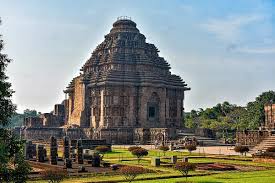
The Sun Temple at Konark, located in Odisha, India, is one of the most spectacular architectural wonders of ancient India. It was built by the Eastern Ganga Dynasty King Narasimha Deva I in the 13th century CE (around 1200 CE) and is dedicated to Surya, the Sun God. The temple is renowned for its massive size, intricate carvings, and unique architectural design that combines religious significance with symbolic representation.
- The Konark Sun Temple is designed in the shape of a massive solar chariot. The temple structure is meant to resemble a chariot, with 12 pairs of wheels (24 wheels in total) and drawn by seven horses, all facing east. The chariot symbolizes the Sun’s journey across the sky.
- The temple was originally constructed with highly symbolic features, such as the wheels, which represent the passage of time and the cosmic cycles. Each wheel is intricately carved with detailed imagery of daily life, gods, and celestial figures.
- The seven horses symbolize the seven days of the week, while the 12 pairs of wheels symbolize the 12 months of the year.
- The temple originally included a sanctum sanctorum (garbhagriha) housing an image of Surya, a lofty curvilinear shikhara (spire), and other architectural elements. The sanctum would have been the focal point of worship, where the image of the Sun God was placed.
- The Jagmohana (assembly hall) is an essential part of the temple, measuring 34.14 meters (112 feet) in length and 38.4 meters (126 feet) in height. This hall was used for congregation and rituals.
- The temple also featured a dance hall (Natya Mandapa), which was traditionally used for devotional dance performances dedicated to the Sun God. This would have added to the spiritual and cultural richness of the temple.
- The entire temple complex was originally enclosed by a large compound wall, measuring 264 meters (866 feet) in length and 165 meters (541 feet) in width, creating a grand space for worship and gatherings.
- The temple had three main entrances (gates), allowing access from different directions, each providing a majestic view of the grand temple structure.
- The temple’s design and orientation are deeply symbolic. The chariot-like temple represents the cosmic chariot of the Sun God, and its movement across the sky is reflected in the direction and carvings of the horses and wheels. The eastward facing structure is aligned with the rising sun, symbolizing new beginnings and the eternal cycle of life and death.
- The large wheels are decorated with intricate carvings, depicting a variety of themes, including the cycle of life, time, astrology, and various deities from Hindu mythology.
- The sunrise and sunset are key moments at Konark, as the temple was designed so that the first rays of the sun would illuminate the central sanctum, emphasizing the temple’s dedication to Surya.
- The Konark Sun Temple is one of the largest surviving Sun temples in the world and is a prominent symbol of ancient Indian architectural, artistic, and spiritual traditions.
- It is an embodiment of the Kalinga style of architecture, which is known for its intricate stone carvings and pyramid-like temple structures.
- The temple was once a major pilgrimage site, drawing thousands of devotees who visited to worship Surya and seek blessings for health and prosperity.
- The temple complex was also a cultural center, where dance, music, and other artistic performances were part of religious observances.
- Over the centuries, the temple has suffered considerable damage due to natural elements, looting, and the erosion of sandstone and other materials. The main sanctum, the shikhara, and parts of the chariot structure have largely been destroyed.
- The central image of Surya was also moved to the Jagannath Temple in Puri, and many of the temple’s sculptures were taken or displaced.
- Despite this, much of the intricate stonework, sculptures, and architectural features have survived, making the temple a vital part of India’s architectural heritage.
- In the 20th century, conservation efforts were undertaken to protect the temple and its remains. The temple is now managed by the Archaeological Survey of India (ASI), which continues to restore and preserve the site.
- The Sun Temple at Konark was designated a UNESCO World Heritage Site in 1984. It is recognized not only for its architectural brilliance but also for its significant contribution to India’s cultural and spiritual legacy.
- The temple is one of the most visited heritage sites in India and attracts tourists, scholars, and spiritual seekers from around the world.
- Magha Saptami, the festival of the Sun, is celebrated with great enthusiasm at the Konark Sun Temple. On this day, thousands of devotees gather to take a holy dip in the nearby Chandrabhaga River and offer prayers to Surya.
- The Konark Dance Festival, held annually at the temple, showcases classical dance forms such as Odissi, Bharatanatyam, and Kathak, in the backdrop of the Sun Temple, offering a blend of cultural and spiritual experiences.
The Konark Sun Temple is a monumental architectural masterpiece, deeply intertwined with the spiritual and cultural history of India. Its unique design, representing a solar chariot, and its stunning carvings make it one of the most awe-inspiring temples in the world. Despite facing the ravages of time, the temple continues to stand as a symbol of devotion to Surya, and its legacy endures in the architectural, artistic, and religious traditions of India.