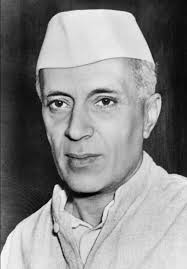
Jawaharlal Nehru became the head of the Interim Government of India on 2 September 1946, leading the country during the transition period while British rule was still in place. This was a significant phase as India was preparing for its independence, and Nehru was instrumental in steering the country through the crucial negotiations with the British and the formation of the Indian Constituent Assembly.
Nehru was a key figure in India’s freedom struggle, particularly through his leadership of the Indian National Congress (INC) and his influence on the Indian independence movement alongside Mahatma Gandhi and other prominent leaders. His ideas on democracy, secularism, and modernization became the cornerstone of India’s governance post-independence.
Upon independence on 15 August 1947, Nehru became the first Prime Minister of India. His leadership was essential in consolidating India’s status as a newly independent republic.
Nehru implemented a series of social and economic reforms aimed at modernizing India. Some of his key initiatives included:
Nehru’s focus on large-scale industrialization led to the establishment of public sector enterprises and the setting up of institutions like the Indian Institutes of Technology (IITs) and Indian Institutes of Management (IIMs).
He introduced the Five-Year Plans, modeled after the Soviet Union’s planning system, aimed at promoting economic growth.
While his economic policies contributed to growth, the agricultural sector faced challenges, especially regarding food security, leading to subsequent reforms.
Nehru laid the foundation for modern education and scientific advancement in India, emphasizing secular education and research institutions.
Nehru was a founding figure in the Non-Aligned Movement (NAM), advocating for India to stay independent of both the U.S. and Soviet spheres of influence during the Cold War.
His tenure was marked by the 1947 Partition and the subsequent Indo-Pakistani wars of 1947–1948 and 1962. Nehru’s leadership during the Kashmir conflict remains one of the most significant aspects of his foreign policy.
Nehru firmly believed in a secular, democratic India. His efforts led to the adoption of the Indian Constitution in 1950, guaranteeing fundamental rights to all citizens, and laying the framework for a parliamentary democracy. He also emphasized the importance of unity in diversity, despite the challenges of managing a newly independent nation with diverse cultures, languages, and religions.
Nehru’s impact on modern India remains substantial. His ideas of democratic socialism, scientific temper, and self-reliance influenced subsequent generations of leaders and shaped India’s political and economic landscape.
Nehru passed away on 27 May 1964 while still in office. His death marked the end of an era for India, as he had led the country for 17 years.
After Nehru’s death, Lal Bahadur Shastri succeeded him as Prime Minister, continuing many of Nehru’s policies while introducing some changes.
Nehru is credited with laying the foundation for a modern, democratic India.
He emphasized scientific research, leading to advancements in areas such as nuclear science and space exploration.
Nehru championed the cause of education for all, women’s rights, and secularism, promoting social and economic reforms that have had a lasting impact.
His policies of non-alignment helped India maintain independence in its foreign relations during the Cold War.
Nehru’s tenure as Prime Minister remains one of the most significant in Indian history, shaping the nation’s path for decades to come.