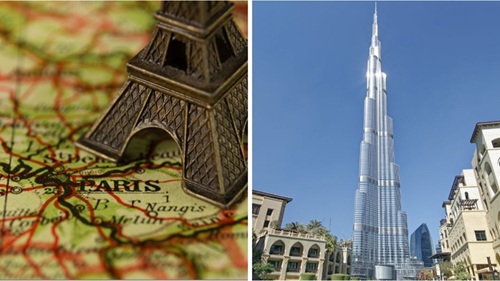
“From iron lattices piercing the Parisian sky to glass and steel soaring above the Arabian desert, two architectural marvels continue to define the skylines—and ambitions—of their nations.
The Eiffel Tower, completed in 1889, was once criticized as an eyesore. Today, it stands as a global symbol of art, romance, and engineering brilliance. Designed by Gustave Eiffel, the tower revolutionized the use of iron in large-scale structures and became a blueprint for modern construction.
More than a century later, the Burj Khalifa in Dubai redefined the limits of vertical architecture. Standing at a staggering 828 meters, it remains the tallest building in the world. Designed by Adrian Smith, the skyscraper represents the rapid urban transformation of the UAE and its vision for the future.
While separated by time, geography, and materials, both structures share a common legacy: they pushed boundaries, sparked debate, and ultimately became enduring cultural icons.
Experts say these landmarks are more than tourist attractions—they are milestones in human innovation. The Eiffel Tower marked the industrial age’s confidence, while the Burj Khalifa reflects the technological prowess and global aspirations of the 21st century.”
The Eiffel Tower, completed in 1889, was once criticized as an eyesore. Today, it stands as a global symbol of art, romance, and engineering brilliance. Designed by Gustave Eiffel, the tower revolutionized the use of iron in large-scale structures and became a blueprint for modern construction.
More than a century later, the Burj Khalifa in Dubai redefined the limits of vertical architecture. Standing at a staggering 828 meters, it remains the tallest building in the world. Designed by Adrian Smith, the skyscraper represents the rapid urban transformation of the UAE and its vision for the future.
While separated by time, geography, and materials, both structures share a common legacy: they pushed boundaries, sparked debate, and ultimately became enduring cultural icons.
Experts say these landmarks are more than tourist attractions—they are milestones in human innovation. The Eiffel Tower marked the industrial age’s confidence, while the Burj Khalifa reflects the technological prowess and global aspirations of the 21st century.”