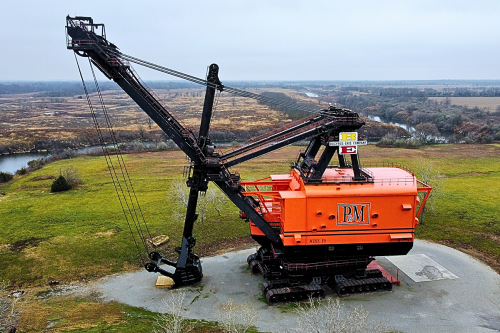
World’s Largest Electric Shovel, famously known as Big Muskie, remains one of the most extraordinary achievements in heavy engineering and industrial machinery. Built in the United States, this colossal machine symbolized the peak of large-scale mining technology and the ambition of mid-20th-century industrial design.
Constructed in the 1960s for strip mining operations in Ohio, Big Muskie was powered entirely by electricity and designed to move vast amounts of earth with unmatched efficiency. The shovel weighed an astonishing 13,500 tons and featured a massive bucket capable of holding over 220 cubic yards of material in a single scoop — enough to fill multiple railroad cars at once.
Unlike diesel-powered machines, Big Muskie relied on a high-voltage electric system, making it quieter and more energy-efficient for its size. Its towering boom, enormous tracks, and complex mechanical systems required constant coordination by skilled operators and engineers, reflecting the advanced technical knowledge of the era.
For decades, the electric shovel played a critical role in coal mining, reshaping landscapes and powering industries across the region. When mining operations ended, the machine was dismantled, but its legendary bucket was preserved and placed on public display in Cumberland, Ohio, where it now serves as a lasting monument to industrial heritage.