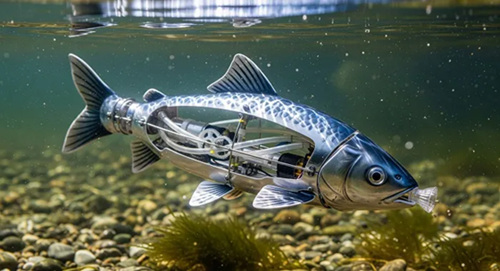
Researchers at the University of Surrey have brought to life a groundbreaking robotic fish prototype designed to swim through rivers and lakes while collecting harmful microplastics tiny plastic particles that pose a major threat to aquatic ecosystems and human health.
The bio-inspired robot, developed from a winning idea in the university’s Natural Robotics Contest, mimics the movement of a real fish and features gill-like filters that trap microplastics as it swims. The design allows water to flow through while capturing plastic debris inside its body, offering a new way to monitor and reduce pollution in natural waterways.
What sets future versions of the robo-fish apart is a striking concept in which the device could power itself by converting the collected pollutants into energy — essentially turning plastic waste into fuel for its own operations. These upgrades could enable the robot to operate for extended periods without external charging, potentially making it a self-sustaining environmental cleanup tool.
Originally inspired by a student’s creative idea, the prototype has already proved that biomimetic robotics can play a practical role in tackling the global microplastic crisis. Researchers envision future iterations that are fully autonomous, capable of patrolling waterways independently and helping scientists better understand and address plastic pollution. This innovative blend of robotics and environmental science marks a promising step toward sustainable solutions for cleaning oceans and rivers, offering hope that technology can help counter one of the most challenging problems of the modern age.