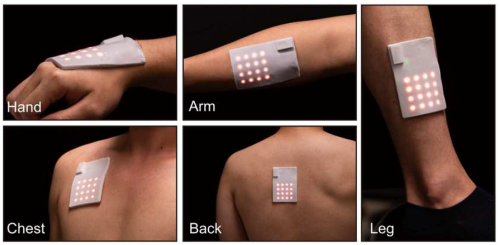
Scientists in Hong Kong have unveiled a breakthrough soft electronic skin (e-skin) technology that could make remote human touch possible, allowing people to physically feel contact over the internet for the first time. Developed by researchers at City University of Hong Kong (CityU), the innovation represents a major step toward expanding digital communication beyond sight and sound into the realm of touch.
The newly developed e-skin is a wireless, flexible patch that can be worn directly on the body. It is capable of both detecting physical touch and reproducing that sensation on another wearer’s device in real time. In practice, this means a gentle press, tap, or even a hug from someone far away could be transmitted digitally and felt through the skin-worn interface almost instantly.
At the core of the technology is a sophisticated network of microscopic sensors and actuators embedded within the soft material. These components convert physical touch into digital signals, transmit them via Bluetooth or internet connections, and then recreate the sensation on a paired e-skin device. The result is a seamless loop of sensing, communication, and physical feedback—effectively creating a touch-based communication network.
Researchers say the innovation could transform virtual reality, the metaverse, and remote interaction, making digital environments far more immersive and emotionally engaging. Unlike current systems that rely primarily on visual and audio cues, e-skin introduces a tactile dimension that mirrors real-world human interaction.
Beyond entertainment and virtual experiences, the technology holds promise for long-distance relationships, telemedicine, and assistive communication. Scientists note that it could be especially valuable for visually impaired users, enabling new ways to receive information and connect with others through physical sensation rather than screens or sound alone.
The e-skin’s soft, stretchable design allows it to conform naturally to the human body, making it comfortable for prolonged use. Its wireless operation eliminates bulky hardware, helping bridge the gap between advanced electronics and natural human movement.
While the technology is still in the research stage, experts believe it marks a critical step toward a future where digital communication feels more human. “Touch is one of the most powerful forms of connection,” researchers noted, emphasizing that restoring it across distance could profoundly change how people interact in virtual spaces.