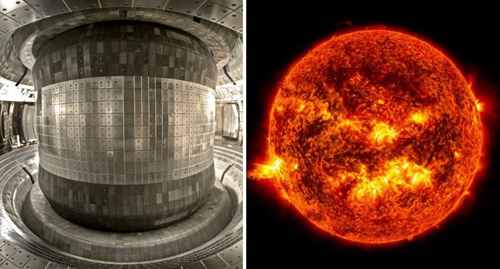
China has achieved a stunning scientific breakthrough in nuclear fusion research as its Experimental Advanced Superconducting Tokamak (EAST) — widely known as the “artificial sun” — successfully heated plasma to 100 million degrees Celsius, nearly seven times hotter than the core of the Sun. The milestone was reached during a record‑setting run in which EAST sustained a super‑heated plasma for more than 1,000 seconds (over 17 minutes), far surpassing its own previous performance and setting a new benchmark for long‑duration high‑temperature operation.
Nuclear fusion — the process that powers stars — has long been seen as the holy grail of energy, promising a future of clean, virtually limitless power with no greenhouse gas emissions and minimal radioactive waste. The fusion reaction requires extraordinarily high temperatures to overcome the electric repulsion between atomic nuclei, making EAST’s achievement a significant step forward in the quest to harness it on Earth.
Despite the dramatic heat, the real challenge remains keeping the ultra‑hot plasma stable and confined long enough to produce usable energy, something scientists around the world are still striving to master. Each second of sustained fusion brings researchers a little closer to this goal.
The success at EAST highlights China’s growing capabilities in advanced energy research and contributes to the global effort to develop sustainable, fusion‑based power systems that could one day free humanity from dependence on fossil fuels. This milestone isn’t just a lab accomplishment — it’s a glimpse into a potential future where Earth is powered by the same force that lights the stars.