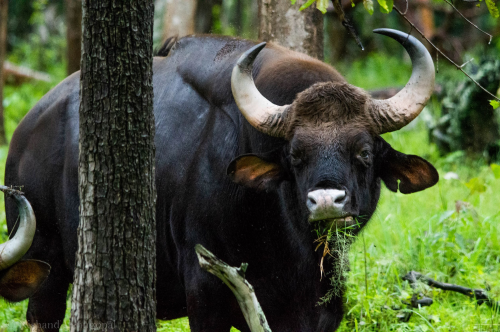
The Indian bison, commonly known as the gaur, holds the title of the largest wild cattle species in the world. Native to India and parts of Southeast Asia, these magnificent herbivores roam forests and grasslands, playing a crucial role in maintaining ecological balance.
Gaurs are powerful yet shy animals, typically forming small herds led by females. Their distinctive features include a muscular build, large curved horns, and striking white “stockings” on their legs, making them easily recognizable in the wild.
Beyond their impressive size, gaurs are vital for forest ecosystems. By feeding on a variety of plants, they help control vegetation growth and disperse seeds, contributing to the health and regeneration of their habitats. However, shrinking forests and human encroachment have made them increasingly vulnerable.
Conservation efforts in India and neighboring countries have been implemented to protect gaurs, with the species listed under national wildlife protection laws. Preserving their habitats is critical not only for the survival of these giants but also for the broader ecosystems that depend on them.
The Indian bison remains a symbol of India’s rich biodiversity and a reminder of the importance of wildlife conservation in sustaining the country’s natural heritage.