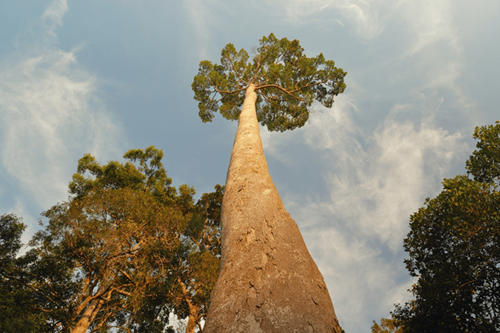
Standing as a silent testament to the majesty of nature, Hyperion, the tallest tree in the world, reaches an astonishing 379 feet (115.5 meters) in height. This towering coast redwood (Sequoia sempervirens) is estimated to be between 700 and 800 years old, quietly surviving for centuries in the heart of California’s Redwood National Park.
Discovered in 2006 by naturalists Chris Atkins and Michael Taylor, Hyperion remains largely hidden from the public to protect it and the fragile ecosystem surrounding it. The tree is part of a dense forest of ancient redwoods, where sunlight barely touches the forest floor and the air is thick with mist and the scent of cedar. Its exact location is deliberately undisclosed to prevent damage from excessive foot traffic, highlighting the ongoing efforts to conserve these natural giants.
Hyperion’s enormous height and age make it not just a record-holder but also a critical part of California’s ecosystem. Coast redwoods like Hyperion absorb vast amounts of carbon dioxide, play a crucial role in sustaining biodiversity, and provide a habitat for countless species of flora and fauna. Its longevity serves as a reminder of the resilience of nature and the importance of protecting old-growth forests in the face of climate change and human development.
Visitors to Redwood National Park can experience other giant trees and enjoy scenic hikes through ancient forests, though the exact site of Hyperion remains a closely guarded secret. Conservationists emphasize that respecting the privacy of these natural wonders is essential to ensure that Hyperion and other record-holding trees continue to thrive for centuries to come.
Hyperion stands as a symbol of the awe-inspiring power of nature, drawing admiration from scientists, travelers, and nature enthusiasts worldwide. Its towering presence reminds humanity of the importance of conservation and the extraordinary natural heritage preserved in places like California’s Redwood National Park.