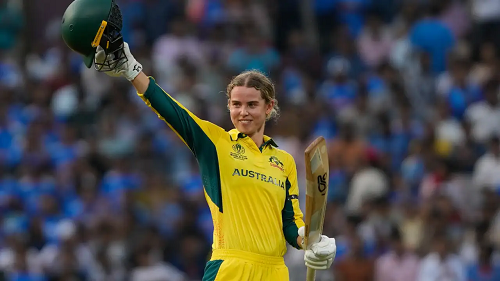
In a thrilling ICC Women’s Cricket World Cup semi-final at the DY Patil Stadium, Australian opener Phoebe Litchfield produced a stunning innings that etched her name into cricketing history — only for Team India to script one of the most remarkable comebacks ever seen in women’s cricket.
The 22-year-old Litchfield, one of the brightest young stars in the game, scored a magnificent 119 off just 93 balls, becoming the youngest player ever to score a century in a Women’s World Cup knockout match. Her explosive innings, laced with crisp drives and fearless strokeplay, powered defending champions Australia to a formidable 338 all out in 49.5 overs.
Litchfield’s partnership with veteran Ellyse Perry (77) laid the foundation for what looked like an unassailable total. She reached her maiden World Cup hundred in just 80 deliveries, showcasing her trademark poise and aggression under pressure.
- 119 runs off 93 balls
- Youngest centurion in Women’s World Cup knockout history
- Helped Australia post 338 — their highest in a World Cup semi-final
What followed, however, was pure cricketing drama. Chasing 339 — the highest target ever set in a Women’s ODI — India pulled off an extraordinary victory, led by Jemimah Rodrigues’ unbeaten 127 and Harmanpreet Kaur’s commanding 89.
The duo anchored India’s innings with composure and flair, steering the team home with five wickets and eight balls to spare, sealing a place in the World Cup final against South Africa.
The victory not only ended Australia’s 15-match winning streak in World Cup games but also marked the highest successful run chase in Women’s ODI history.
While Phoebe Litchfield’s knock will be remembered as one of the most dazzling individual performances in tournament history, it was India’s fearless run chase that turned the semi-final into an instant classic — a night when records fell, legends rose, and cricket fans witnessed history from both sides of the pitch.