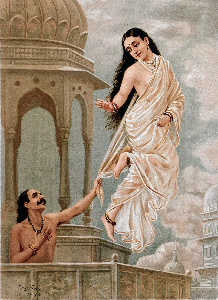
In a fascinating revelation connecting ancient culture and performing arts, the earliest known textual mention of dancers has been traced back to the Rig Veda, one of the oldest religious texts known to humanity. Composed between 1500 and 1200 BCE, the Rig Veda references mythical apsaras—celestial female dancers known for their beauty and grace.
Among the most iconic references is the story of Urvashi, a divine apsara, and her romance with the mortal king Pururava. Their tale, rich in emotion and symbolic meaning, marks the first recorded literary depiction of dance and dancers in Indian—and arguably world—literature.
The apsaras, including Urvashi, Menaka, and Rambha, were believed to perform in the courts of the gods, particularly Indra, the king of heaven. Their graceful movements and performances were not only seen as forms of entertainment but also as expressions of divine beauty and cosmic rhythm.
Cultural historians and Sanskrit scholars note that this early mention underscores the deep spiritual and artistic roots of dance in Indian civilization, positioning it not just as an art form, but as a divine expression embedded in sacred tradition.
This ancient link continues to inspire generations of classical dancers in India, from Bharatanatyam to Odissi, as they draw from the legacy of the apsaras in both style and storytelling.
The Rig Veda’s reference reinforces India’s position as one of the oldest cultural cradles of dance, where myth, art, and devotion intertwine seamlessly.