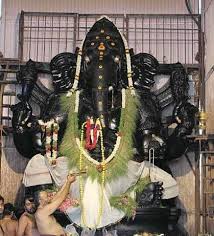
The Ganesha statue at the Mundhi Vinayagar Temple in Puliakulam, Coimbatore District, Tamil Nadu, is a remarkable feat of craftsmanship and devotion. Here are more details about this impressive installation:
The statue stands at a towering height of 6 meters (19 feet 8 inches) and has a width of 3.35 meters (11 feet). Its large size makes it one of the most significant representations of Lord Ganesha in Tamil Nadu.
Weighing an astounding 190 tonnes, the Ganesha statue is carved from a single block of stone, showcasing the skill and dedication of the artisans who created it. This single-stone carving highlights the traditional craftsmanship that is deeply rooted in Indian temple architecture.
The installation of such a massive statue was a significant event for the Mundhi Vinayagar Temple. It required careful planning and execution, involving both spiritual and logistical considerations to ensure the proper placement of this enormous structure.
The abhisheka ritual, a ceremonial anointment of the deity, is a crucial part of worship in Hindu temples. For this Ganesha statue, the ritual involves the use of 3 liters of oil. Given the statue’s height, a ladder is required to reach the top for the ritual.
Lord Ganesha, known as the Remover of Obstacles and the God of Beginnings, holds a special place in Hinduism. The Mundhi Vinayagar Temple’s Ganesha statue serves as a focal point for worshippers seeking blessings for success, wisdom, and prosperity.
Puliakulam is a notable area in Coimbatore, and the presence of this grand statue adds to its cultural and religious prominence. The temple attracts devotees from all over the region, particularly during festivals dedicated to Lord Ganesha.
The statue’s creation from a single block of stone is a testament to the incredible skill of the sculptors. This method is a hallmark of traditional Indian temple sculpture, emphasizing both the durability and the spiritual sanctity of the material.
Despite its large size, the statue likely features intricate carvings and details typical of Ganesha icons, such as the elephant head, the broken tusk, and the modak (sweet) in his hand. These elements symbolize various philosophical and religious concepts within Hinduism.
The Ganesha statue at the Mundhi Vinayagar Temple in Puliakulam is an awe-inspiring example of religious devotion and artistic achievement. Standing at 6 meters tall and weighing 190 tonnes, it is a significant religious icon for the region. The elaborate abhisheka ritual performed with 3 liters of oil underscores the deep reverence with which Lord Ganesha is worshipped. This statue not only serves as a spiritual center for devotees but also stands as a symbol of the rich cultural heritage of Tamil Nadu.