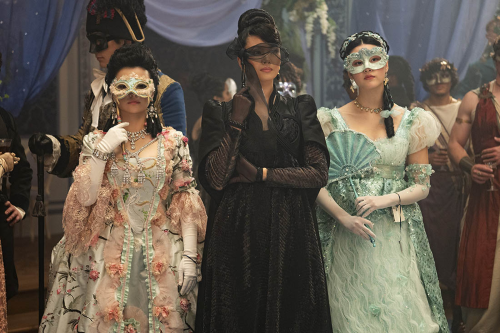
“Netflix’s hit series Bridgerton has captivated audiences not only with romance and drama but also with its dazzling costumes. From jewel-toned gowns to elaborate embellishments, the show presents a vibrant vision of the Regency era—but how accurate is it compared to real historical fashion?
Set in early 19th-century England (roughly 1811–1820), the true Regency style was defined by simplicity, elegance, and classical inspiration. Women typically wore high-waisted Empire-line dresses, made from lightweight fabrics such as muslin. Colors were often pale and restrained—whites, creams, soft pastels—very different from the bold palettes seen in Bridgerton. Sleeves varied from short puffed styles to long, fitted ones, while skirts flowed naturally without heavy corsetry.
Men’s Regency fashion leaned toward tailored refinement. High-collared shirts, waistcoats, fitted coats, and breeches or trousers were the norm. Neutral shades like black, brown, navy, and grey dominated, emphasizing sharp silhouettes over ornamentation. Accessories such as cravats and gloves signaled status and etiquette rather than flamboyance.
Bridgerton deliberately departs from strict historical accuracy. Costume designers have openly described the show’s wardrobe as “Regency-inspired fantasy.” Sequins, metallic fabrics, vibrant colors, and modern tailoring choices were added to reflect emotion, personality, and social hierarchy in a way that resonates with contemporary audiences. Corsets are more dramatic, necklines deeper, and fabrics richer than those typically worn during the period.
Another notable difference lies in representation. While Regency England was governed by rigid class and racial structures, Bridgerton reimagines society through an inclusive lens. Costume choices play a key role in this alternate-history approach, using fashion as a storytelling tool rather than a museum-perfect recreation.
Historians agree that while Bridgerton may not be a textbook example of Regency dress, it successfully captures the spirit of elegance, romance, and social performance that defined the era. By blending history with modern flair, the series has sparked renewed global interest in Regency fashion, literature, and culture.”
Set in early 19th-century England (roughly 1811–1820), the true Regency style was defined by simplicity, elegance, and classical inspiration. Women typically wore high-waisted Empire-line dresses, made from lightweight fabrics such as muslin. Colors were often pale and restrained—whites, creams, soft pastels—very different from the bold palettes seen in Bridgerton. Sleeves varied from short puffed styles to long, fitted ones, while skirts flowed naturally without heavy corsetry.
Men’s Regency fashion leaned toward tailored refinement. High-collared shirts, waistcoats, fitted coats, and breeches or trousers were the norm. Neutral shades like black, brown, navy, and grey dominated, emphasizing sharp silhouettes over ornamentation. Accessories such as cravats and gloves signaled status and etiquette rather than flamboyance.
Bridgerton deliberately departs from strict historical accuracy. Costume designers have openly described the show’s wardrobe as “Regency-inspired fantasy.” Sequins, metallic fabrics, vibrant colors, and modern tailoring choices were added to reflect emotion, personality, and social hierarchy in a way that resonates with contemporary audiences. Corsets are more dramatic, necklines deeper, and fabrics richer than those typically worn during the period.
Another notable difference lies in representation. While Regency England was governed by rigid class and racial structures, Bridgerton reimagines society through an inclusive lens. Costume choices play a key role in this alternate-history approach, using fashion as a storytelling tool rather than a museum-perfect recreation.
Historians agree that while Bridgerton may not be a textbook example of Regency dress, it successfully captures the spirit of elegance, romance, and social performance that defined the era. By blending history with modern flair, the series has sparked renewed global interest in Regency fashion, literature, and culture.”