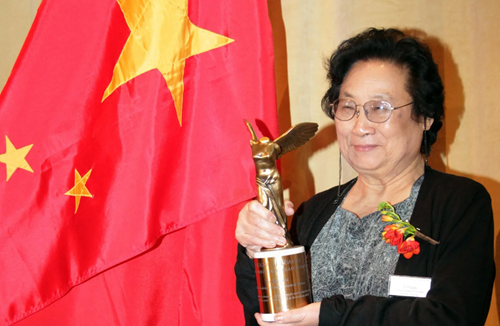
Chinese scientist Tu Youyou transformed the global battle against malaria by rediscovering the antimalarial compound artemisinin from the sweet wormwood plant (Artemisia annua). Her work not only revolutionized treatment for one of the world’s deadliest diseases but also earned her the 2015 Nobel Prize in Physiology or Medicine making her the first Chinese woman to win a Nobel in science.
Malaria, a mosquito-borne illness that was claiming millions of lives particularly in tropical regions of Africa and Asia, posed a major global health crisis throughout the 20th century. Existing drugs such as chloroquine were losing effectiveness due to growing resistance, and there was an urgent need for new therapies.
Tu’s breakthrough came not in a conventional laboratory but in the pages of ancient Chinese medical texts. In the late 1960s and early 1970s, as part of China’s Project 523 an initiative to find new antimalarial treatments. she and her team systematically reviewed traditional remedies. Drawing on centuries-old descriptions of qinghao (sweet wormwood) for treating fever, Tu devised a low-temperature extraction method that preserved the herb’s active compound, which she later isolated and named artemisinin.
Clinical studies quickly showed that artemisinin and its derivatives could rapidly kill the malaria parasite and significantly lower fever in infected patients. Over time, artemisinin-based combination therapies (ACTs) became the standard treatment globally, saving millions of lives and sharply reducing malaria mortality, especially among children in endemic regions.
For her groundbreaking work, Tu Youyou was honored with the Nobel Prize in Medicine in 2015, recognized for her “discoveries concerning a novel therapy against malaria.” Her achievement highlighted the power of integrating traditional herbal knowledge with rigorous scientific research a model that continues to inspire innovation in global health.