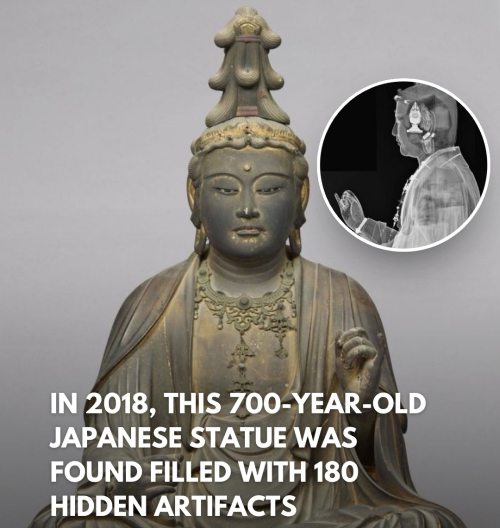
In 2018, researchers at the Nara National Museum made a remarkable discovery using modern medical imaging on an ancient religious artifact. By conducting CT scans on a 30-inch-tall statue of Monju Bosatsu from Hokkeji Temple, experts uncovered a hidden cache of sacred objects that had remained sealed inside the statue for centuries.
The scans revealed 180 ancient items, including handwritten scrolls, relics, and devotional materials carefully placed within the statue’s head and body. These objects were intentionally concealed during the statue’s creation, following a long-standing Buddhist tradition of embedding sacred items to spiritually consecrate religious figures.
Because the statue had never been opened or disturbed, the artifacts were found in exceptional condition. Scholars say the discovery offers a rare and intimate glimpse into medieval Japanese religious practices, beliefs, and craftsmanship, shedding new light on how devotion was expressed during the period.
Beyond its historical significance, the find has greatly enhanced the statue’s importance as a cultural asset. Museum officials note that the presence of untouched relics elevates both its scholarly value and its status as a national treasure, highlighting the successful fusion of advanced technology with cultural preservation.