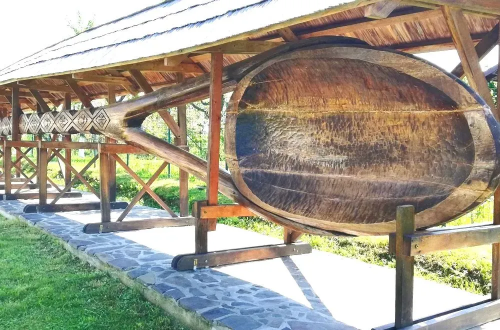
The town of Mioveni, Romania, has officially etched its name into the global record books with the unveiling of the World’s Longest Carved Wooden Spoon, a breathtaking achievement that celebrates traditional craftsmanship and community pride.
Measuring an astonishing 18.2 meters (nearly 60 feet) in length, the massive hand-carved spoon was created by a dedicated team of local artisans, woodworkers, and cultural preservationists. The project—which took nearly eight months of careful planning, carving, sanding, and detailing—was crafted from a single, specially selected log of fir wood sourced from the Carpathian Mountains.
The giant spoon was revealed in the town square during a festive ceremony attended by residents, tourists, and national media. Traditional Romanian music and folk dances accompanied the event, turning the record attempt into a vibrant cultural celebration.
Lead craftsman Ionel Stan, who guided the project from its earliest sketches to the final polish, said the team wanted to create something that represented both skill and heritage.
“Romania has a long history of wood carving, especially in rural communities. This record is a tribute to our ancestors and a reminder that tradition still thrives in Mioveni,” he shared proudly.
Officials from Guinness World Records were present to conduct precise measurements and verify the authenticity of the workmanship. After a thorough inspection, they confirmed the creation as the World’s Longest Carved Wooden Spoon, setting a new global benchmark and earning loud cheers from the crowd.
Local authorities praised the project for its cultural and economic impact. The oversized spoon is expected to become a permanent tourist attraction, drawing visitors interested in folk art, woodworking, and record-breaking curiosities.
Mayor Iulian Georgescu called the accomplishment a symbol of unity:
“This achievement reflects the creativity, dedication, and craftsmanship of our people. Mioveni is proud to bring this world record to Romania.”
The stunning wooden masterpiece will soon be placed on public display in a dedicated outdoor pavilion, where it will stand as a lasting reminder of Romanian artistry—and a shining example of how tradition and innovation can come together to make history.