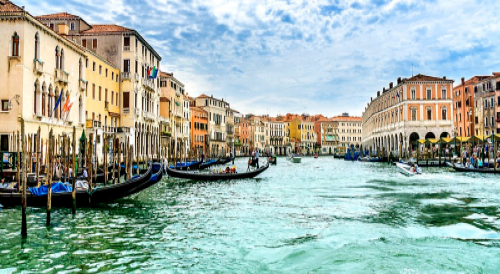
Often called the “floating city,” Venice owes its longevity not to floating structures, but to an ingenious foundation built more than a thousand years ago. The city rests on millions of wooden pilings driven deep into the soft mud of the Venetian Lagoon, creating a stable platform for the canals, palaces, and historic buildings above.
These wooden piles were carefully cut from trees, transported by boat, and hammered into the lagoon until they reached a hard, stable layer below the soft sediment. Remarkably, the wood has remained preserved for centuries because it has stayed submerged in oxygen-poor water, preventing rot. Over time, minerals in the water gradually hardened the wood, transforming it into a durable and lasting foundation.
This extraordinary engineering feat has allowed Venice to endure for more than a millennium, despite its unique location and frequent flooding challenges. Experts continue to study the city’s foundations, both as a testament to medieval ingenuity and as a source of insight for modern engineering in water-rich environments.
Venice’s survival is a reminder that the combination of human creativity and environmental understanding can produce structures that withstand the test of time, even in seemingly impossible conditions.