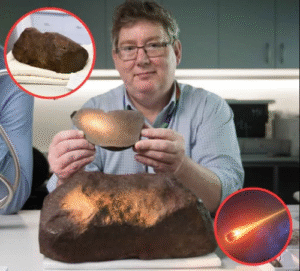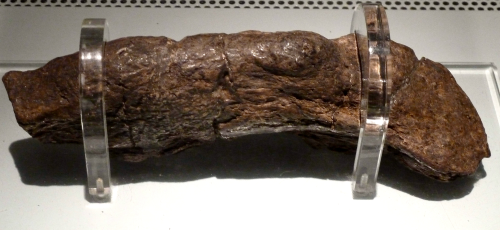
It’s astonishing how even the most unlikely objects can reveal the deepest truths about human history. One such example is the Lloyds Bank Coprolite—an 8-inch piece of fossilized human waste discovered beneath a bank in York, England. Though humorous at first glance, this ancient artifact has become one of archaeology’s most extraordinary and informative finds.
Believed to have been left behind by a Viking more than 1,200 years ago, the coprolite offers scientists an unparalleled window into daily life in the 9th century. Unlike tools, weapons, or artwork, this fossilized stool preserves intimate biological evidence that speaks directly to how people lived, what they ate, and the health challenges they faced.
Analysis of the coprolite revealed:
A diet rich in meat and bread, staples of Viking-era meals
A notable absence of fruits and vegetables, hinting at limited access or seasonal scarcity
Traces of whipworm and maw-worm eggs, indicating widespread intestinal parasites in the population
These findings paint a vivid picture of Viking life—one filled with nutritional imbalance, environmental hardship, and the constant battle against disease. Despite its unglamorous nature, the coprolite has become a vital resource for scholars studying ancient health, hygiene, and diet.
Today, the artifact is displayed proudly at the Jorvik Viking Centre in York, where it attracts thousands of visitors each year. People come not for its appearance, but for the extraordinary story it tells: that even the most mundane traces of human life can survive the centuries and reveal priceless insights into our past.
The Lloyds Bank Coprolite reminds us that history isn’t only preserved in monuments or manuscripts—it can also be found in the most unexpected, messy, and thoroughly human places.