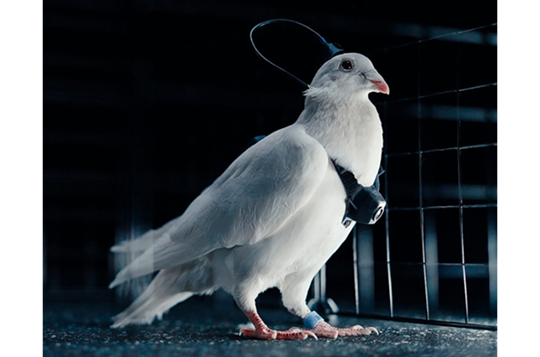
In a development that sounds like science fiction, Russian neurotechnology firm Neiry has successfully tested a flock of pigeons equipped with brain implants and solar-powered backpacks that allow operators to steer their flight remotely — without traditional training.
According to company reports and independent media, the system works by surgically implanting tiny electrodes into specific regions of a bird’s brain. These electrodes connect to an onboard stimulator and GPS-linked controller mounted in a lightweight backpack, which receives wireless instructions from human operators. By delivering targeted electrical impulses, operators can influence flight direction and navigate routes much like a conventional drone.
Neiry claims that this neural-interface design allows the pigeons — dubbed “biodrones” — to fly long distances and monitor areas such as power lines, gas distribution nodes, infrastructure corridors, and remote regions more effectively than many conventional unmanned aerial vehicles, thanks to birds’ natural endurance and agility.
Unlike trained animals, Neiry asserts that no behavioural conditioning is required; the implanted interface alone is said to make birds “respond” to flight commands. The company also plans to adapt the system for other avian species — including ravens for heavier payloads and seagulls for coastal monitoring applications. Neiry’s pioneering work has been showcased in Moscow trials, where the first brain-chipped pigeons were reported to fly from a laboratory and back under guided control. Company materials emphasize the solar-powered electronics and integrated GPS ensure real-time positioning and extended mission capability.
The effort has ignited debate online and among experts about the ethics, practicality and potential uses of such technology — from peaceful industrial inspection to more controversial surveillance or military applications. Debate continues as more details emerge about the project’s real-world deployment and animal welfare implications.