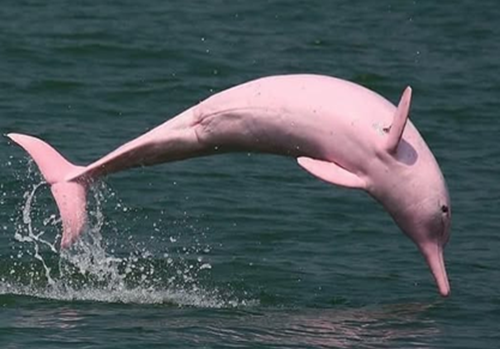
Pink dolphins — among the most striking marine creatures on the planet — continue to capture global attention for their rarity and beauty. In 2015, Labroots highlighted an extraordinary sighting of a pink bottlenose dolphin nicknamed “Pinky,” reporting that only about 14 of these rare individuals were known worldwide at that time — a reflection of how uncommon visible pink dolphins can be in nature. However, not all pink dolphins belong to this tiny group. The Chinese white dolphin (Sousa chinensis), also called the Indo-Pacific humpback dolphin, naturally appears pink — especially when active — due to blood vessels near the skin surface that help regulate body heat. These dolphins are found along coastal waters from China to Southeast Asia and are known for their distinctive blush-like hue.
Despite their enchanting appearance, these dolphins face serious conservation concerns. In areas like the Pearl River Delta, estimates suggest around 2,000–2,500 Chinese white dolphins remain, but their numbers are threatened by habitat loss, marine traffic, pollution and industrial development. Marine scientists stress that while some individual albino dolphins like “Pinky” remain extremely rare, populations of naturally pink-appearing Chinese white dolphins serve as indicators of coastal ecosystem health and highlight the urgent need for habitat protection.
From viral sightings to scientific concern, pink dolphins remain among the most fascinating and vulnerable creatures in the marine world. Chinese white dolphins — known locally as pink dolphins due to their rosy coloration driven by blood flow near the skin — inhabit estuaries and coastal waters of the western Pacific.
These dolphins are not only a remarkable natural sight but also an ecological treasure. In Hong Kong and nearby waters, their numbers have fluctuated over recent decades, with some local counts dropping sharply as infrastructure projects, pollution, and marine traffic disturb critical habitats.
Although earlier reports once highlighted sightings of exceptionally rare pink dolphins — such as the Louisiana-based “Pinky” thought to be one of only 14 known individuals of its kind in 2015 — modern science recognizes that several dolphin species can appear pink, and that distinctly pink populations like the Amazon river dolphin and the Chinese white dolphin each tell unique conservation stories. With climate change, coastal development and human pressures intensifying, researchers and conservationists warn that urgent action is needed to protect these beautiful animals before their numbers fall further.