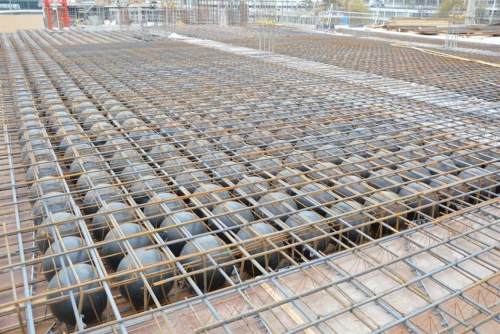
At first glance, BubbleDeck slabs might look like a quirky arrangement of oversized golf balls trapped in steel—but in reality, they represent one of the most innovative and sustainable ideas in modern construction. By strategically placing hollow plastic spheres in areas of concrete that carry no structural load, BubbleDeck slabs dramatically reduce the dead weight of concrete without compromising strength or safety.
The concept is deceptively simple yet highly effective. By creating voids within the slab, architects and engineers can achieve longer unsupported spans, reduce the number of columns required, and significantly cut material costs. This design flexibility opens new possibilities in modern building layouts, allowing for more open interiors and creative architectural solutions.
From a sustainability perspective, BubbleDeck slabs offer striking benefits. For every kilogram of plastic used in the spheres, up to 100 kilograms of concrete can be saved. Less concrete means less cement production—a major contributor to global CO₂ emissions—making this approach not only cost-effective but also environmentally responsible.
Already gaining traction in commercial, residential, and industrial projects worldwide, BubbleDeck technology is praised for combining structural efficiency with ecological mindfulness. Developers and architects note that it shortens construction times, reduces load on foundations, and improves overall building performance, all while maintaining safety standards.
As urban centers expand and sustainable construction becomes increasingly crucial, BubbleDeck slabs are being hailed as a revolutionary step forward in rethinking how buildings are designed, built, and experienced. Lightweight, strong, and eco-conscious, this innovation is setting a new benchmark in architectural engineering.