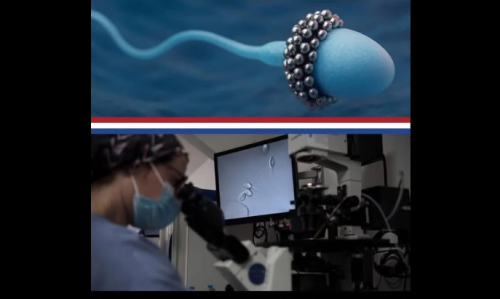
In a remarkable leap for reproductive science, researchers in Amsterdam, Netherlands, have unveiled the world’s first magnetically controlled robotic sperm, a discovery that could transform fertility treatments for millions of couples worldwide. This pioneering achievement blends biology with engineering, creating tiny hybrid sperm cells equipped with magnetic coatings that allow doctors to steer them with unprecedented precision.
The innovation addresses one of the most challenging issues in reproductive medicine — cases where natural sperm struggle to reach or penetrate the egg due to motility problems, structural abnormalities, or difficult internal pathways. With the help of external magnetic fields, the robotic sperm can be guided directly toward the egg, improving the chances of successful fertilization.
Scientists behind the project describe these micro-scale robots as a revolution in targeted medicine. Unlike traditional procedures such as IVF or ICSI, which still rely heavily on chance and manual skill, magnetically guided sperm allow clinicians to control the fertilization process at the microscopic level. This increases accuracy, reduces complications, and may significantly boost pregnancy success rates, especially for couples facing severe infertility.
Early trials in controlled laboratory environments have shown promising results. The robotic sperm move smoothly, respond instantly to magnetic cues, and demonstrate the capability to navigate obstacles that natural sperm often cannot overcome. While the technology is still in its early research phase, experts believe it represents a bold step toward the future of reproductive care — one that is safer, more efficient, and profoundly personalized.
Ethicists and medical professionals are now closely observing the next stages of development, as the technology moves toward more advanced testing. If successful, this breakthrough could redefine fertility treatments across Europe, Asia, and beyond — giving hope to millions who dream of starting a family.