China has set a new world record in magnetic levitation (maglev) technology after successfully testing a tonne-class vehicle that accelerated to a staggering speed of 700 km/h in just two seconds. The breakthrough test was conducted on a 400-metre magnetic levitation test track and marked the fastest performance ever achieved by a superconducting electric maglev system.
According to reports, the vehicle was safely brought to a stop after reaching peak speed, demonstrating both extreme acceleration and precise control. Video footage released by China’s state broadcaster CCTV on December 25 showed the vehicle—resembling a bare chassis—shooting across the track in a flash, leaving a visible trail of mist behind.
The test reportedly resolved several core technical challenges associated with ultra-high-speed transport. These include ultra-high-speed electromagnetic propulsion, electric suspension guidance, transient high-power energy storage and conversion, and the use of high-field superconducting magnets. Experts say overcoming these hurdles places China among the world’s top-tier nations in ultra-high-speed maglev technology.
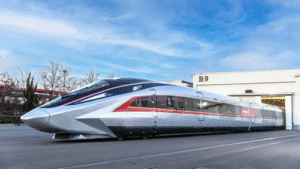
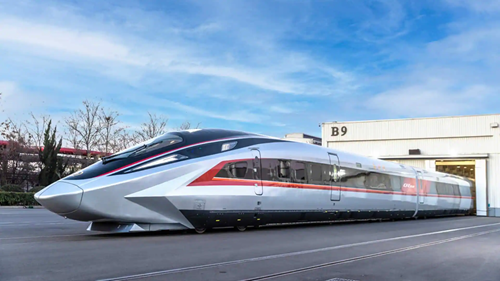
Currently, China’s operational high-speed trains run at speeds of up to 350 km/h (around 217 mph) and even support 5G connectivity, including inside long tunnels. By comparison, long-haul commercial passenger aircraft typically cruise at speeds between 547 and 575 mph.
The successful test also opens new possibilities for future transport systems, including vacuum-pipeline maglev or “hyperloop”-style travel. In maglev systems, superconducting magnets allow trains to levitate and move forward without physical contact with the track, significantly reducing friction and enabling unprecedented speeds.
This achievement signals a major leap forward in next-generation transportation and reinforces China’s ambition to lead the world in ultra-fast, futuristic mobility solutions.