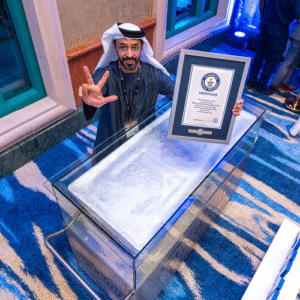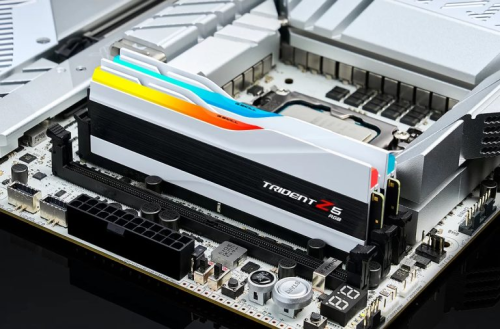
The global overclocking community is buzzing with excitement after renowned overclocker Cens pushed G.Skill’s DDR5 memory past a staggering 13,300 MT/s, setting a new world record and redefining the upper limits of memory performance. The achievement marks one of the most significant breakthroughs in DDR5 overclocking since the standard’s introduction, reaffirming G.Skill’s position at the forefront of high-performance memory innovation.
The record-setting feat was accomplished using a customized extreme overclocking setup, equipped with liquid nitrogen (LN2) cooling, high-end motherboards, and a finely tuned voltage configuration. Cens, known in the enthusiast world for his precision engineering and deep expertise, successfully pushed the G.Skill DDR5 kit beyond previously established benchmarks, breaking through the 13,300 MT/s threshold—an achievement once thought unattainable under current hardware constraints.
Industry observers note that this milestone reflects both the exponential progress of DDR5 technology and the skill of elite overclockers pushing components far past their factory specifications. G.Skill, already known for producing some of the fastest consumer-grade memory modules in the world, celebrated the accomplishment as proof of its continued commitment to engineering excellence.
“Reaching this frequency is not just a win for us, but for the entire DDR5 ecosystem,” a G.Skill representative stated. “Each new record expands the horizon of what memory performance can be, paving the way for future advancements in both professional and consumer systems.”
Cens’s overclock was validated using industry-standard benchmarks and verification tools, ensuring that the world record stands on solid technical ground. The overclocking community has already begun analyzing the configuration, hoping to understand the combination of timings, voltages, and motherboard tuning that made the monumental leap possible.
Experts believe this breakthrough could influence future DDR5 module designs, especially as manufacturers continue targeting ultra-high-frequency kits for next-generation gaming rigs, AI workloads, and high-performance computing environments.
For now, Cens’s accomplishment stands as a defining moment in the evolution of memory technology—an astonishing demonstration of how far hardware can be pushed when engineering, innovation, and extreme cooling come together in perfect harmony.