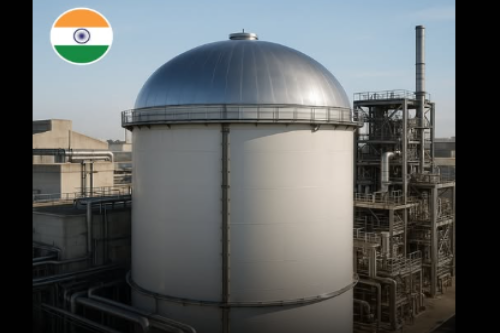
In a transformative leap for global energy, scientists at the Bhabha Atomic Research Centre (BARC) have announced a breakthrough in thorium-based nuclear technology that could redefine sustainable power. The newly developed next-generation reactors are reportedly capable of powering an entire district for up to 14 years using just 200 grams of thorium fuel.
This innovation positions India at the vanguard of the “Clean Nuclear” movement, leveraging the nation’s vast monazite sands—home to nearly 25% of the world’s thorium reserves—to achieve long-term energy independence.
Traditional uranium reactors require frequent refueling and produce high-level radioactive waste. BARC’s thorium-powered design, however, utilizes a unique closed-fuel cycle. Thorium-232 is converted into fissile Uranium-233 within the reactor, creating a self-sustaining loop with an energy density nearly 100 times higher than conventional fuels. Unlike traditional pressurized water reactors, these thorium units are designed with passive safety systems. In the event of a power failure, the reactor naturally cools down without human intervention, significantly reducing the risk of accidents. Furthermore, because thorium is not a “fissile” material on its own, the technology is inherently proliferation-resistant, making it a gold standard for international security.
The announcement comes as the Indian government ramps up its Nuclear Energy Mission, with a target of reaching 100 GW of nuclear capacity by 2047. The introduction of the SHANTI Bill (2025) in Parliament further supports this by opening doors for private sector participation in the deployment of these “Bharat Small Reactors.”
“This is not just an energy solution; it’s a strategic shield,” noted a senior BARC scientist. “By tapping into our indigenous thorium, we are moving away from the volatility of global uranium markets toward a future where a handful of sand can power a city.
“With the design phase complete, BARC and the Nuclear Power Corporation of India (NPCIL) are now identifying “brownfield” sites—including retiring coal plants—to house the first wave of these futuristic power packs.