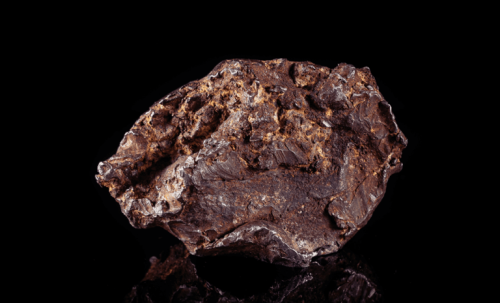
A team of scientists in Australia has reported the detection of human DNA–like genetic material inside a meteorite estimated to be more than 2 billion years old, igniting intense debate within the global scientific community and raising profound questions about the origins of life.
The meteorite, recovered and analyzed under controlled laboratory conditions, reportedly contains organic compounds that closely resemble segments of human genetic material. According to researchers involved in the study, the molecular structures found within the space rock match sequences associated with human DNA, a discovery that—if validated—could radically reshape current understanding of biology and evolution.
Some scientists argue the findings may lend support to panspermia theory, the idea that life—or its essential building blocks—originated in space and were delivered to Earth via meteorites and comets billions of years ago. Under this hypothesis, life on Earth may not have begun independently, but rather evolved from pre-existing cosmic material.
“This challenges the assumption that complex organic chemistry is exclusive to Earth,” one researcher said, emphasizing that meteorites have long been known to carry amino acids and organic compounds, but never genetic material resembling human DNA.
However, skepticism remains strong. A significant number of experts believe the detected DNA could be the result of modern contamination, introduced during collection, handling, or laboratory analysis. Human DNA is notoriously difficult to eliminate completely from scientific environments, and critics caution that even microscopic exposure could produce misleading results.
“To claim human genetic material existed before Earth formed requires extraordinary evidence,” said an independent molecular biologist not involved in the research. “Contamination is the simplest explanation, and it must be conclusively ruled out.”
The research team acknowledges the controversy and says additional testing is underway, including independent verification by international laboratories, isotopic dating of the organic compounds, and deeper genomic analysis to determine whether the sequences are truly extraterrestrial or terrestrial in origin.
If confirmed, the implications would be staggering. It would suggest that the ingredients of human biology may predate Earth itself, forcing scientists to reconsider long-held assumptions about evolution, life’s beginnings, and humanity’s place in the universe.
For now, the discovery remains unverified but deeply provocative—a reminder that space continues to challenge what we think we know. As further analysis unfolds, the scientific world watches closely, aware that either outcome will shape our understanding of life beyond Earth for generations to come.