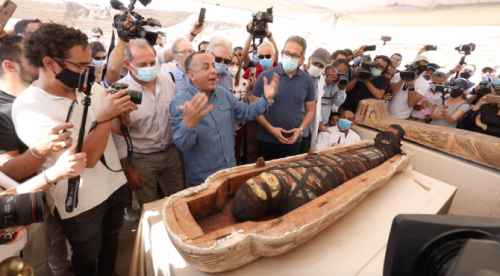
Archaeologists working in the vast necropolis of Saqqara, south of Cairo, have uncovered 59 sealed wooden sarcophagi, many of which remained untouched for 2,500 years. Belonging largely to Egypt’s 26th Dynasty, these coffins were discovered stacked in deep burial shafts, astonishingly well-preserved despite the passage of millennia.
Initial examinations revealed that several sarcophagi still contain mummies wrapped in linen, complete with intricately painted faces, hieroglyphic inscriptions, and vibrant colors that survived centuries underground. Experts say the craftsmanship reflects the high-status individuals buried here — likely priests, officials, and elite members of society during a period known for cultural revival and monumental architecture.
Alongside the sarcophagi, archaeologists recovered statues, amulets, and funerary artifacts, offering deeper insight into how ancient Egyptians prepared for the afterlife, a journey they believed required protection, ritual, and divine guidance.
This remarkable discovery is part of Egypt’s ongoing effort to strengthen global interest in its archaeological heritage. In recent years, Saqqara has become a focal point for new digs and scientific research, helping Egypt boost tourism, which remains a vital part of its economy.
Officials from the Ministry of Antiquities say the newly unearthed coffins will soon be displayed in a major museum exhibition, allowing visitors to witness a stunning chapter of ancient Egyptian history preserved beneath the sands for over two millennia.