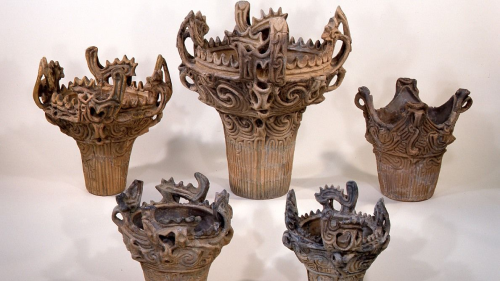
In a remarkable discovery that highlights the ingenuity of early human civilizations, archaeologists in Japan have brought attention to the Jōmon pottery, some of the oldest known ceramics in the world. Dating back to approximately 8,000 B.C., these intricately designed pots are over 10,000 years old, predating even the construction of the Great Wall of China and the Egyptian pyramids.
The Jōmon pots, named after the distinctive cord-marking patterns that adorn them, were primarily used for cooking and storage. However, their artistic flair and elaborate designs indicate a society that valued both functionality and aesthetics. Experts note that these pots demonstrate a level of sophistication in early craftsmanship that rivals later civilizations.
“This discovery challenges our understanding of prehistoric cultures,” said Dr. Hiroshi Tanaka, a leading archaeologist at the University of Tokyo. “The Jōmon people had developed complex pottery techniques far earlier than previously thought, showing that art and daily life were intertwined even in ancient times.”
Several museums in Japan now feature these ancient artifacts, allowing the public to appreciate the exquisite designs and the historical significance of the Jōmon era. The preservation of these pots also provides crucial insight into the daily life, rituals, and societal structures of Japan’s earliest inhabitants.
Historians believe that this discovery will not only deepen knowledge of Japan’s ancient past but also offer a comparative understanding of human innovation across the globe during the Neolithic period.