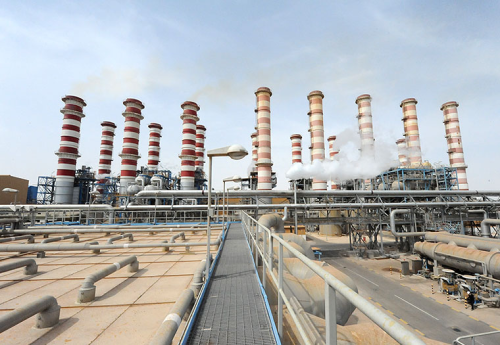
Qatar is making a powerful push toward long-term water security with massive investments in cutting-edge desalination technology. At the center of this effort is the Umm Al Houl Power complex, a sprawling facility now producing an impressive 564 million liters of drinking water every single day — enough to meet the needs of millions of people across the country.
While Saudi Arabia still holds the record for the world’s largest individual desalination plant, Qatar’s Umm Al Houl system stands out as one of the most advanced and efficient desalination hubs globally. Its performance is crucial for a nation located in one of the driest regions on Earth, where natural freshwater sources are nearly nonexistent.
The complex uses reverse osmosis (RO), a state-of-the-art filtration method that pushes seawater through specialized membranes to produce clean, safe drinking water. RO technology is known for its efficiency, lower energy consumption, and ability to deliver high-quality freshwater compared to older thermal desalination techniques.
What truly sets Umm Al Houl apart is its dual-function design — combining power generation and desalination within a single integrated facility. This synergy reduces operational costs, increases efficiency, and cuts down the environmental impact typically associated with large-scale desalination.
Experts say that Qatar’s approach demonstrates how smart engineering and sustainable design can address some of humanity’s most pressing challenges — particularly in regions facing water scarcity due to climate change, rapid urbanization, and harsh desert climates.
With continued investment in advanced water technologies, Qatar is positioning itself as a leader in securing reliable, long-term water supplies, while showcasing how innovation can transform essential infrastructure for the 21st century.