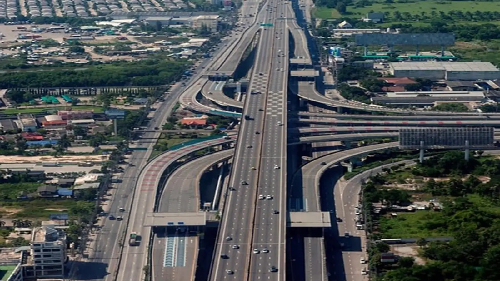
The Bang Na Expressway, officially known as the Burapha Withi Expressway, is not just a road; it’s an engineering marvel that stretches 55 kilometers (34 miles) across the landscape of Bangkok, Thailand. This elevated highway, which held the Guinness World Record for the world’s longest bridge for a decade, remains a monumental feat of civil engineering and a vital artery for the region.
Completed in 2000, the six-lane toll road was built to alleviate the severe traffic congestion that plagued Bangkok’s eastern corridor. It runs above National Highway 34, providing a seamless route for commuters and freight transport between the city and the provinces of Samut Prakan and Chachoengsao. The project was a collaboration between a German and a Thai company and cost approximately $1 billion.
The construction of the Bang Na Expressway was a massive undertaking, requiring 1.8 million cubic meters of concrete. The bridge features a precast, prestressed concrete superstructure, with segments cast and then assembled in a span-by-span method. This innovative construction technique was critical for building the elevated structure while minimizing disruption to the traffic below.
The expressway’s design is a testament to modern engineering, with a wide, 27-meter box girder structure supported by single columns. The bridge’s design also incorporates two toll plazas on the elevated section, where the road widens to accommodate twelve lanes of traffic.
While other bridges have since surpassed its length, the Bang Na Expressway continues to be a crucial part of Thailand’s infrastructure, symbolizing the nation’s commitment to modern transportation and urban development. Its design and construction serve as a case study in large-scale bridge projects and its impact on reducing traffic and spurring economic growth in the region is undeniable.