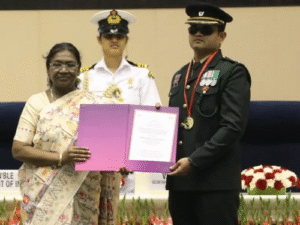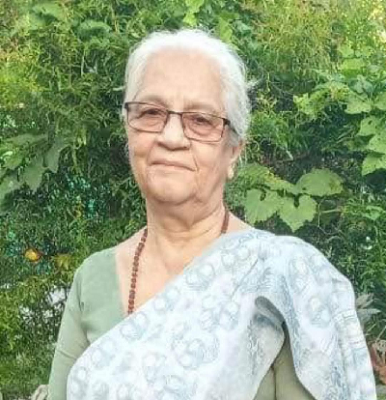
Renowned writer, educator, and cultural advocate Smt. Gita Upadhyay has been awarded the Padma Shri 2025 for her exceptional contributions to Literature and Education, making her one of Assam’s most celebrated literary figures.
Born on February 14, 1939, in Gangmouthan (present-day Biswanath district), Smt. Upadhyay is the granddaughter of freedom fighter Chhabilal Upadhyay, the first president of the Assam Pradesh Congress Committee. She holds the distinction of being the first woman from Assam’s Gorkha community to receive both Bachelor’s and Master’s degrees in Political Science during the 1950s and 60s.
Her academic journey took her to Sibsagar College, where she began teaching in 1965 and went on to serve for 34 years, retiring as the Head of the Department of Political Science. She also worked in administrative and advisory roles at Tezpur University and state-level educational bodies, consistently championing youth development and women’s empowerment.
Beyond her academic influence, Smt. Upadhyay is a bilingual literary powerhouse, having authored and translated over two dozen works in Assamese and Nepali. These include novels, poetry collections, essays, travelogues, biographies, and children’s literature. Her translation of The Diary of Anne Frank into both Assamese and Nepali is considered a landmark in regional literature.
Her novel Janmabhumi Mero Swadesh, a tribute to her grandfather and a reflection on identity and belonging, earned her the Sahitya Akademi Award in 2016.
She has held prestigious positions in literary organizations such as the Nepali Sahitya Parisad (Assam) and Bharatiya Gorkha Parisangh (Assam Unit). Her leadership has helped elevate the voice of the Gorkha community while fostering cultural unity across Assam’s diverse population.
The Padma Shri recognition has been met with celebration across the state. Community leaders, scholars, and citizens lauded her for her tireless service to literature and education, calling her “a beacon of inclusive Assamese identity.”
Smt. Gita Upadhyay’s recognition is not just a personal triumph, but a celebration of Assam’s linguistic and cultural plurality. Her writings and leadership have strengthened bridges between communities, empowered women in academia, and preserved precious literary heritage across generations.