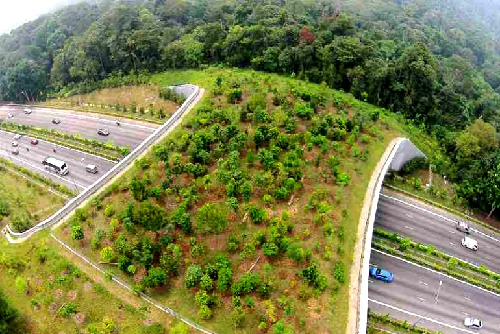
In a pioneering step toward wildlife conservation and sustainable infrastructure, the National Highways Authority of India (NHAI) has inaugurated the country’s first dedicated animal overpass corridor on the Delhi–Mumbai Expressway near the Ranthambore Tiger Reserve buffer zone .
- 12 km stretch through a critical wildlife zone, integrating five 500‑m wildlife overpasses and India’s longest wildlife underpass (1.2 km).
- Designed in conjunction with the Wildlife Institute of India and the Ministry of Environment & Forests, ensuring minimal ecological disruption.
- The overpasses blend seamlessly into the natural terrain and are covered with native vegetation, encouraging animal use.
- Additional eco-conscious measures include:
- 35,000 trees planted along the corridor
- Rainwater harvesting systems installed every 500 m
- Sound barriers and 4‑m boundary walls to channel wildlife movement safely
- Modular formwork and drip irrigation to reduce construction waste and water use.
“This is India’s longest animal overpass corridor… not a single untoward incident occurred during the construction phase.”
Camera traps have already recorded tigers, bears, deer, and other wildlife using the structures—a testament to their success.
- This corridor aligns with global best practices like the “ecoducts” in the Netherlands.
- It sets a high standard for upcoming expressways, with similar wildlife crossings planned in Madhya Pradesh, Chhattisgarh, and other eco-sensitive zones.
By facilitating safe animal movement across the expressway, this corridor significantly reduces human–animal conflict and vehicle collisions. It strengthens connectivity between Ranthambore and Chambal Valley, a crucial ecological landscape. Looking ahead, the success of this initiative could reshape highway planning in India, embedding wildlife safeguards from project inception.
India now leads the way in eco-sensitive infrastructure, demonstrating that modern development can coexist with—and support—the country’s rich natural heritage.