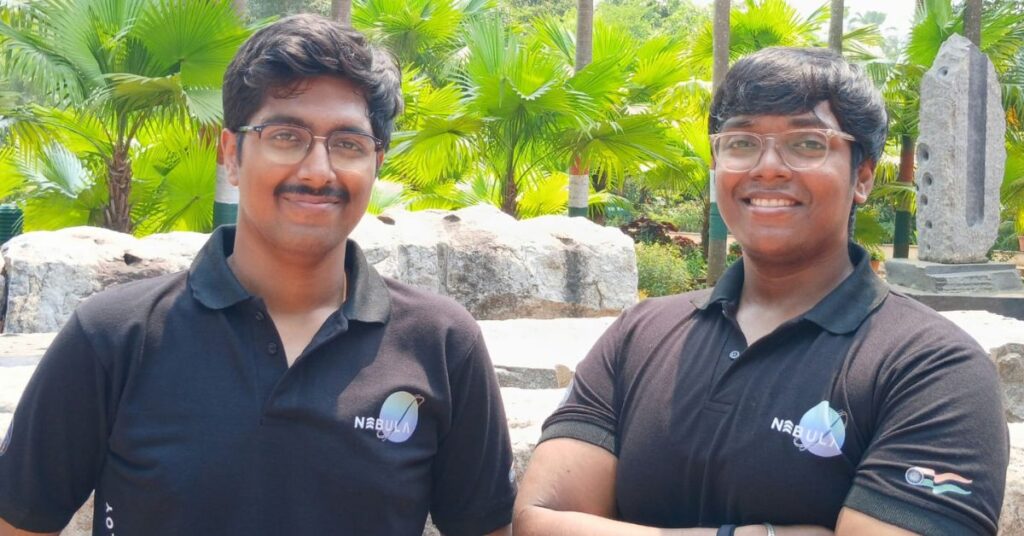
For most, the dream of becoming an astronaut ends in childhood. But for Snehadeep Kumar, 21, from Durgapur, and Mohit Kumar Nayak, a Computer Science student from Bhubaneswar, that dream has only grown bigger—and more real.
Together, these two young visionaries are on the cusp of a national milestone: building India’s first student-developed gamma-ray detection CubeSat, through their ambitious startup, Nebula Space Organisation.
Founded by a team of college students, Nebula Space Organisation aims to democratize space research in India—bringing it out of elite labs and into student-led innovation hubs. At the center of their current mission is the development of a CubeSat, a miniature satellite designed to detect and monitor gamma-ray bursts, among the most energetic events in the universe.
“We’re not just building a satellite,” says Snehadeep, co-founder and space science enthusiast. “We’re building a future where space is no longer out of reach for Indian students.”
The CubeSat, once launched, will orbit Earth to detect cosmic gamma radiation—crucial for understanding supernovae, neutron stars, and black hole activity. Their innovation could add valuable data to global astrophysics research, traditionally led by space giants like NASA and ESA.
“Our goal is to show that space research doesn’t have to be government-driven or cost millions,” adds Mohit. “It can be agile, student-powered, and still scientifically significant.”
Both founders share a deep-rooted love for space. While Snehadeep spent nights stargazing in Durgapur, Mohit wrote code for space simulations in his hostel room in Bhubaneswar. What sets them apart is that they didn’t let the dream fade with age. Instead, they gathered like-minded peers, partnered with mentors, and began working on a satellite from scratch—using open-source tools, campus labs, and relentless dedication.
In a country with a world-class space agency like ISRO, their effort stands out for its independent, grassroots spirit. Nebula Space Organisation is now being recognized in academic and tech circles as a new model for student-led innovation in high-tech fields.
Their initiative comes at a time when India is witnessing a surge in private space ventures, and startups like theirs could bridge the gap between academic research and real-world space missions.
- Prototype testing of the CubeSat is underway.
- They aim for orbital deployment in collaboration with a commercial launch provider by 2026.
- Meanwhile, Nebula is also building educational programs to mentor other student teams across India.
In a world where most space dreams fade into desk jobs, Snehadeep and Mohit are building rockets out of resolve—and aiming them straight at the stars.