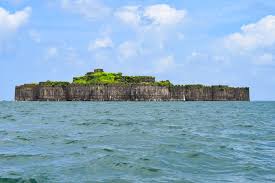
Janjira Fort, also known as Murud-Janjira Fort, is a remarkable sea fort located on an island off the coast of Murud village in Raigad District, Maharashtra. The fort’s history, architecture, and strategic location have made it one of the most important historical landmarks along India’s western coastline.
- Janjira Fort was built in the 17th century by Malik Ambar, a prominent Abyssinian general and minister in the court of the Nizam Shahi dynasty. Malik Ambar was a key figure who played a crucial role in resisting the Mughal Empire during the early 1600s.
- The fort was constructed on a small island in the Arabian Sea, near the coastal town of Murud in the Raigad district. It is located about 1.5 kilometers (1 mile) off the coast and is accessible only by boat.
- The fort earned a notable reputation for being the only undefeated fort on the western coast of India. It successfully withstood attacks from both the Dutch and British East India Companies, making it a symbol of resilience and military strength.
- Janjira Fort is known for its solid and strategic construction. The fort’s design is a blend of Maratha and Arabian architectural styles, showcasing the engineering prowess of its time.
- The fort walls are made of limestone and concrete, and the fortress is equipped with large bastions and high walls that offer formidable protection from enemy attacks.
- The fort is designed to withstand the harsh coastal weather, with massive towers and thick gates providing defense against naval attacks.
- The fort’s interior includes several wells, mosques, and palaces, with remnants of the royal residences and structures inside. The most famous structure within the fort is the central tower that houses the reliquary of Malik Ambar.
- Janjira Fort’s location on an island made it an excellent naval base and an impenetrable fortress. The surrounding sea and natural rocky outcrops created a defensive moat that was difficult for enemies to cross.
- The fort’s position allowed it to control the sea route along the Konkan coast, which made it a vital strategic asset during the colonial era.
- Despite multiple attempts by the Dutch and British to capture the fort during the colonial era, it remained unconquered, solidifying its reputation as an invincible fortress.
- The Dutch East India Company attempted to capture the fort in the 17th century, but their efforts were unsuccessful due to the fort’s strategic location, formidable defenses, and well-planned maritime strategies employed by its defenders.
- Similarly, the British East India Company, during their colonial expansion, tried to seize the fort but was also unable to breach its strong defenses. This reputation for being undefeated has made the fort a symbol of resilience and independence.
- The fort was also undefeated during the Maratha Empire’s campaigns, as the Marathas made several attempts to take control of the fort but were thwarted.
- After the fall of the Nizam Shahi dynasty, the fort came under the control of the Siddis of Janjira, a powerful Muslim dynasty that ruled over the fort for several centuries.
- The Siddis maintained a strong naval presence and continued to hold Janjira Fort until the British took control of the region in the 19th century. However, the fort itself remained largely independent and intact even during British rule.
- During the colonial period, the fort’s strategic location made it valuable, but it was not a direct target for major attacks because of its invulnerable position.
- Janjira Fort is spread over a large area and includes several bastions, towers, and artillery emplacements. Some of the notable features of the fort include:
- The main entrance gate: A massive, imposing gate that serves as the only access point to the fort from the sea.
- The mosque: Located in the central courtyard, the mosque is an important feature of the fort and a reminder of its cultural and religious significance.
- The palace: The ruins of a royal palace within the fort, which was once home to the rulers of the fort.
- The arsenal: The fort’s armory, which contained weapons and ammunition used to defend the fort from invaders.
- The bastions: Several large bastions equipped with artillery, positioned strategically to defend against sea attacks.
- The natural spring: A freshwater spring that was essential for sustaining the fort’s inhabitants during sieges.
- Today, Janjira Fort is a popular tourist destination. Visitors can take boat rides from Murud to the fort and explore its historic ruins. The fort remains largely intact, with much of its original structure still visible.
- Despite its historical significance, the fort is relatively underdeveloped in terms of tourism infrastructure, but it remains a must-visit destination for history enthusiasts and those interested in military architecture.
- The fort’s unconquered legacy and stunning coastal views make it a fascinating site for visitors looking to explore Maharashtra’s rich heritage.
- Janjira Fort has played an important role in the history of the Konkan region and remains an iconic structure representing the resilience of the Siddi rulers. Its historical significance continues to inspire pride among the people of the region.
- The fort also stands as a symbol of the region’s strategic importance during the colonial era and is an enduring reminder of the military and architectural ingenuity of the time.
Janjira Fort is one of India’s most remarkable sea forts, notable for its indestructible defenses, strategic location, and historical significance. Its unconquered legacy, along with its architectural beauty, makes it a symbol of the resilience of its builders and defenders. The fort continues to attract tourists and historians alike, eager to explore its rich history and imposing structure.