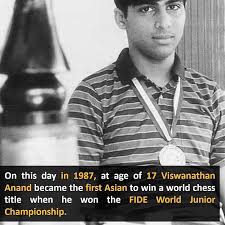
- Achievement: Viswanathan Anand became the World Junior Chess Champion at the age of 17 years and 225 days, setting a record as the youngest-ever player to win the prestigious title at that time.
- World Junior Chess Championship (1987): This prestigious title is contested by the top young chess players from around the globe. Anand’s victory in 1987 demonstrated his exceptional talent, skill, and ability to compete against some of the world’s brightest young minds in chess.
- Age: At just 17 years and 225 days, Anand became the youngest-ever World Junior Chess Champion, a record that highlighted his extraordinary potential and placed him firmly on the international chess map.
- Global Recognition: Winning the World Junior Championship in 1987 catapulted Anand to international fame, marking him as a rising star in the chess world. This victory was a significant stepping stone toward his future success in the world of chess, eventually leading to his status as a five-time World Chess Champion.
- Record Breaking: The record for being the youngest player to win the World Junior Championship stood for several years and further solidified Anand’s place among the best in the world.
- Foundation for Future Success: The 1987 World Junior Championship win was the start of Anand’s dominant career in the chess world, foreshadowing his future victories and achievements, including his ascension to the World Chess Champion title in 2000.
- Inspiration for Indian Players: Anand’s victory inspired generations of Indian chess players and provided the country with a global figure to look up to. It demonstrated that India could produce world-class chess talent, encouraging young players to aspire for similar success.
- Boost to Indian Chess: Anand’s achievements, starting with his World Junior Championship win in 1987, played a pivotal role in popularizing chess in India and laying the foundation for future champions from the country.
Viswanathan Anand’s World Junior Chess Championship victory in 1987 remains one of the defining moments in his career and a milestone in the history of Indian chess. At just 17 years old, his victory not only established him as a future chess champion but also marked the beginning of an illustrious career that would see him reach the pinnacle of global chess. His achievement at such a young age became an inspiration for many aspiring chess players worldwide and remains a defining achievement in the history of the sport.