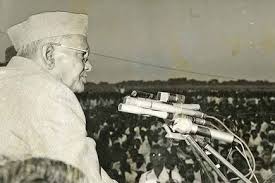
The Janata Party’s victory in the 1977 general election was a watershed moment in India’s political history, marking the end of Indira Gandhi’s rule and the establishment of the first non-Congress government in independent India. Here’s a detailed look at this historic development:
Indira Gandhi, the Prime Minister of India, imposed a state of emergency in 1975, citing internal disturbances. This move led to widespread political repression, suspension of civil liberties, and the arrest of opposition leaders.
During the Emergency, political opponents were silenced, media was censored, and the political environment was tightly controlled by the government. While the Emergency lasted until 1977, it generated significant discontent among the Indian public.
The opposition to Indira Gandhi’s government grew, particularly after the Emergency was lifted in 1977. The events of the Emergency, combined with economic challenges, rising unemployment, and discontent with authoritarian governance, contributed to a surge in support for the opposition.
Jayaprakash Narayan, a prominent leader of the Bihar movement (also known as the Total Revolution), became the central figure in the opposition to Indira Gandhi. His appeal to democratic values, civil rights, and social justice resonated with many people across India.
In the aftermath of the Emergency, Jayaprakash Narayan played a crucial role in bringing together various opposition parties into a unified alliance, which eventually led to the formation of the Janata Party.
The Janata Party was a coalition of several ideologically diverse groups, including the Socialists, the Indian People’s Party (a predecessor to the Bharatiya Janata Party), and dissident factions of the Congress Party.
The 1977 general elections were held after the Emergency was lifted. Indira Gandhi called for early elections in the face of growing opposition and unrest.
The Indian National Congress (INC), under Indira Gandhi, faced widespread public anger for its role during the Emergency, which contributed to its electoral defeat.
The Janata Party, led by Jayaprakash Narayan and united under the banner of anti-Congress sentiment, won a decisive victory in the 1977 general election.
The Janata Party’s victory marked the first time a non-Congress party formed the government at the national level in India. This was a historic shift in the Indian political landscape, breaking the Congress Party’s long dominance.
After the Janata Party’s victory, Morarji Desai, a senior leader of the party, was appointed as Prime Minister. Desai, a veteran freedom fighter and former Congress leader, became the first non-Congress Prime Minister of independent India.
Desai was a well-respected figure, known for his integrity and commitment to social and economic reforms. However, his tenure was marked by challenges due to the coalition’s internal differences, and the government struggled with issues like leadership disputes, policy conflicts, and coalition instability.
One of the key actions of the Janata Party government was the restoration of civil liberties and democratic rights that had been suspended during the Emergency.
The government undertook electoral reforms, focusing on the introduction of measures to strengthen democracy and reduce electoral malpractices.
The Janata Party government moved towards more market-oriented policies, though internal disagreements within the coalition affected its ability to carry out long-term reforms.
The Janata Party government was short-lived. Internal divisions, ideological differences, and leadership struggles within the coalition led to its collapse in 1979.
In 1979, Morarji Desai resigned as Prime Minister, and the Janata Party split into several factions, contributing to the decline of the coalition government.
In the 1979 by-elections, the Congress returned to power under Indira Gandhi in 1980, marking the end of the Janata Party’s rule.
The 1977 general election and the formation of the Janata Party government represented a significant shift in Indian politics. It demonstrated the power of popular dissent against authoritarian rule and the rise of a coalition-based political system.
The defeat of the Congress in 1977 and the success of the Janata Party marked a new phase in Indian politics, where multi-party coalitions became more common and the dominance of the Congress party was no longer assured.
Despite its short tenure, the Janata Party’s government is remembered for its role in challenging the Congress monopoly on power and initiating a process of political change in India.
In summary, the Janata Party’s victory in 1977 was a historically significant event, bringing a non-Congress government to power for the first time in India’s post-independence history.