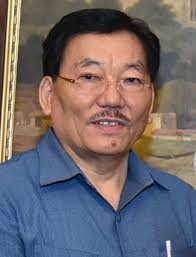
- Pawan Kumar Chamling served as the Chief Minister of Sikkim for 24 years and 165 days, from 12 December 1994 to 26 May 2019, making him the longest-serving Chief Minister in Indian history.
- He was the leader of the Sikkim Democratic Front (SDF) and held office for five consecutive terms, demonstrating remarkable political longevity and stability.
- Sustainable Development and Eco-Tourism: Chamling’s governance emphasized sustainable development, focusing on making Sikkim an environmentally-conscious state. One of his significant achievements was promoting eco-tourism and ensuring that Sikkim’s natural resources were used responsibly.
- Organic Farming Revolution: Under Chamling’s leadership, Sikkim became the first fully organic state in the world in 2016. This was a major achievement in the state’s agricultural practices, drawing international attention and recognition for its organic farming policies.
- Infrastructure Development: Chamling played a pivotal role in enhancing Sikkim’s infrastructure, particularly in terms of roads, communication, and transportation, thereby improving the state’s connectivity with the rest of the country.
- Education and Healthcare: His tenure saw an increase in government investment in education and healthcare, contributing to the overall human development in Sikkim. His focus on inclusive growth aimed at uplifting marginalized communities and fostering social development.
- Global Recognition: Sikkim’s success in becoming a model for sustainable development, particularly through its organic farming and eco-tourism, earned Chamling global recognition for his leadership.
- The 2019 Sikkim Assembly elections saw the defeat of Chamling’s party, the Sikkim Democratic Front (SDF), by the Sikkim Krantikari Morcha (SKM), led by Prem Singh Tamang (P.S. Golay). This marked the end of Chamling’s historic tenure as the Chief Minister of Sikkim.
- Jyoti Basu served as the Chief Minister of West Bengal from 1 June 1977 to 6 November 2000, for a total of 23 years and 137 days, making him the second-longest-serving Chief Minister in Indian history.
- He was a prominent leader of the Communist Party of India (Marxist) [CPI(M)] and played a pivotal role in establishing Left Front dominance in West Bengal.
- Land Reforms and Tenant Rights: One of the most significant achievements of Basu’s tenure was the Operation Barga program, which aimed to empower tenant farmers by giving them land ownership rights. This was a major land reform initiative that helped redistribute land to the rural poor and improved agricultural productivity in West Bengal.
- Decentralized Governance: Basu emphasized the importance of decentralized governance and championed the Panchayati Raj system, which empowered local self-governments at the grassroots level. This helped strengthen democratic institutions and improve governance in rural areas.
- Industrial Stagnation: Despite his successes in land reforms and governance, Basu’s tenure faced challenges, particularly in the form of industrial stagnation. The state saw a decline in traditional industries, and there were criticisms about the lack of progress in industrial development during his time in office.
- In 1996, Basu was offered the position of Prime Minister of India as part of a United Front coalition, but he declined the offer due to his party’s decision. Basu later referred to this decision as a “historic blunder”, as it could have changed the course of Indian politics at the time.
| Chief Minister | State | Tenure | Notable Contributions |
| Pawan Kumar Chamling | Sikkim | 24 years, 165 days (1994–2019) | Organic farming, eco-tourism, infrastructure development |
| Jyoti Basu | West Bengal | 23 years, 137 days (1977–2000) | Land reforms, Panchayati Raj, Left politics |
- Political Stability and Voter Trust: Both Chamling and Basu maintained a stable political environment in their respective states, demonstrating the ability to retain voter trust and political dominance over extended periods. Their leadership proved that consistent governance could lead to long-term stability and success.
- Lasting Impacts on Governance: Both leaders left a lasting legacy on their states’ political and economic landscapes. Chamling’s policies have made Sikkim a model for sustainable development and organic agriculture, while Basu’s land reforms and decentralized governance have shaped the political and social structure of West Bengal.
- Influence on Future Strategies: Their long tenures have influenced political strategies in their respective states and beyond, particularly in terms of coalition-building, social policies, and governance models.
Both Pawan Kumar Chamling and Jyoti Basu remain iconic figures in Indian politics, with their lengthy tenures reflecting their ability to adapt to changing political environments while maintaining a strong vision for their states’ development.