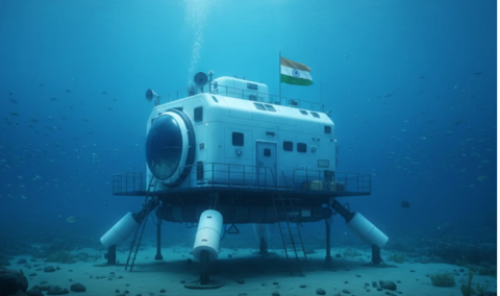
India is setting its sights on an unprecedented feat in oceanic research: the construction of the world’s deepest underwater laboratory at a staggering depth of 6,000 meters (approximately 3.7 miles) in the Indian Ocean. This ambitious initiative is part of the country’s Deep Ocean Mission and aligns with its long-term Vision 2047 for scientific and technological advancement.
Currently, the world’s only operational underwater laboratory is the Aquarius Reef Base in Florida, which operates at a mere 19 meters below the surface. India’s planned laboratory would dramatically surpass this depth, opening new frontiers for deep-sea research and exploration. Scientists anticipate that the facility will enable groundbreaking studies in marine biology, geology, climate science, and the unique ecosystems of the deep ocean.
Officials involved in the project state that the laboratory is currently in the planning and development phase, with engineering and safety challenges being carefully assessed. Once operational, it would position India as a global leader in deep-sea exploration, offering scientists an unparalleled platform to investigate the largely uncharted depths of the Indian Ocean.
Experts say the facility could have far-reaching implications, including advances in underwater robotics, marine resource management, and climate modeling, while also inspiring a new generation of oceanographers and marine engineers.
With this project, India aims not only to expand scientific knowledge but also to reinforce its strategic and technological presence in the Indian Ocean region, aligning with its broader Vision 2047 goals of becoming a global hub for innovation and research.