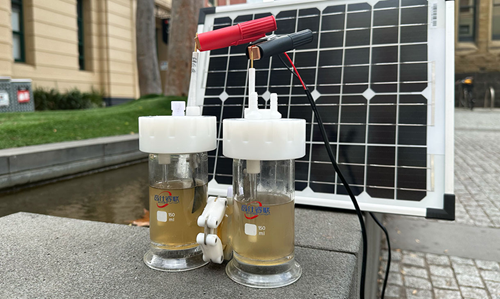
A major technological breakthrough has been achieved at the University of Adelaide, where researchers have developed a pioneering solar-powered system capable of generating green hydrogen fuel directly from untreated seawater, effectively turning the ocean into a potentially limitless energy source.
This innovation addresses one of the biggest challenges in green hydrogen production: the reliance on scarce and costly purified freshwater supplies. The University of Adelaide-led international team, including Professor Shizhang Qiao and Associate Professor Yao Zheng from the School of Chemical Engineering, accomplished the feat by using a non-precious and affordable catalyst in a commercial electrolyser.
The specialized system successfully performs electrolysis—the process of splitting water into hydrogen and oxygen—with nearly 100% efficiency, even when using natural seawater. Crucially, the process avoids the two major obstacles previously hindering seawater electrolysis:
No Pre-treatment Needed: The system eliminates the need for energy-intensive and expensive processes like desalination or purification.
No Corrosion or Chemical Waste: The innovative design introduces an acid layer over the catalysts in situ to manipulate the local reaction environment. This unique approach prevents the corrosive by-products (like chlorine gas) and insoluble salt precipitates that typically damage electrodes and reduce efficiency.
Associate Professor Yao Zheng confirmed, “We used seawater as a feedstock without the need for any pre-treatment processes like reverse osmosis desalination, purification, or alkalisation.”
This breakthrough significantly lowers the cost and environmental footprint of green hydrogen production, making it scalable and affordable globally.
Researchers believe the discovery could rapidly accelerate the global transition away from fossil fuels, particularly in hard-to-decarbonize sectors. The successful use of an almost infinite resource like seawater positions this technology as a cornerstone for a future powered by clean, renewable hydrogen for shipping, aviation, and heavy manufacturing.
The team is now focused on scaling up the system by using a larger commercial electrolyser, moving the technology from the lab to industry-level applications.